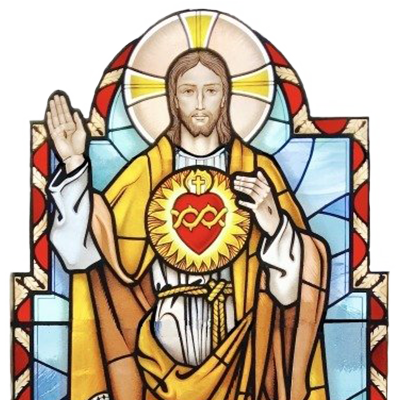
A Serious Business . . .(24th Sunday Year A)

Webmaster • September 12, 2026

Jesus was an extraordinary teacher, but most of his teachings weren’t “new” or “original;” he drew them from the wealth of his Jewish traditions and scripture. We see an example of this today in his teachings about forgiveness after reading from Sirach’s instructions on the subject. Sirach wrote about 150-200 years before Jesus’ time. On his part, Sirach based some of his teachings on wisdom from even earlier in Jewish history.


This is the second week in a row we read some of Jesus’ teaching about the importance of forgiveness. Peter’s question about how many times we must forgive someone else (seven times?) suggests that in their day people struggled with what some of us still struggle with today - forgiving others only to be repeatedly hurt and disappointed again. We get the sense that Peter may have thought he was generous in offering to forgive someone seven times. Jesus’ answer, which can be translated either as “77 times” or “70 times seven times,” would have been shocking - as it probably still is to us today. Surely the point isn’t the exact number of times we forgive because if we are keeping count, we aren’t entirely generous and free with our forgiveness. Jesus’ point is not the number of times we forgive, but the “quality” of our forgiveness. If we imagine God keeping track of how many times we are forgiven, it will detract from the mercy. So if we want to be forgiven fully and freely, we are asked to do the same for others.


The parable about the merciless official which follows fleshes out the spirit of forgiveness that God displays and which Jesus asks us to reach for. The closing warning or threat of punishment for those who do not forgive suggests how seriously Jesus wants his listeners to take this issue. We may not like the image of a Father God who will torture those who are not merciful, but it serves to wake us up to the graveness of the issue at hand.


Questions of the Week

 Are there situations or people whom you find easier to forgive, and those whom you forgive repeatedly?

 Reflect on an experience of struggling to forgive someone, perhaps for a very long time, but then finding the freedom to do so. How did it change you?
By Webmaster • October 26, 2026
The musings of one of God’s smallest creatures on events in and around the Parish over the past seven days . . . . After his holiday away Fr D has now returned back to us, we thank Canon Tony for ‘stepping into the breach’ and looking after us over the past few weeks . . . . Fr D actually arrived home about 21.30 on Saturday evening. First thing he did, of course, was to make himself a pot of tea (which spread to two pots of tea pretty quickly). He opened the ‘box on wheels’ and sorted the contents into four piles: ‘dark,’ ‘coloured,’ ‘ w h i t e , ’ a n d ‘ u n u s e d , ’ before taking one pile upstairs again and then taking the other three into the utility room and playing with the big white boxes! Afterwards he had a sandwich and sorted out the various bits of mail that had gathered whilst he was away ready to look at on Tuesday morning. Then he took himself off to bed, having had a long day travelling. Fr D says that he had a really lovely time whilst away in Crete, it is one of his favourite Greek islands (he likes holidays on the Greek islands, so long as the island has it’s own airport - he has no intention of getting on a Greek ferry!). He finds the island people very welcoming and always delighted that he has a little Greek to show willing when he talks to them - his restaurant speaking is quite passable (certainly to the extent that he manages to get what he wants!). Whilst away he stays in a villa with his friends and they always have one with its own pool. Typically he spends the morning saying his prayers (along with a pot of tea) before the first swim of the day, any shopping required then gets done to include the fresh-baked bread that will be the base of lunch (cheese, tomatoes, olive paste, hummus, kataifi cake). In the afternoon there is either more time around the pool (Fr D hiding from the sun and reading under a shade) or a trip out to visit/see something. Eventually another swim and then getting ready to go out for the evening meal. Fr D has got quite fond of Greek island food (except for fish) which he has discovered bears little resemblance to what Greek restaurants here in the UK serve up!  There are not all that many Catholic churches on the islands compared with Greek Orthodox churches on nearly every street corner and square. However the group manage to get to Mass, usually on Saturday evening before continuing on to a restaurant. Fr D finds that being in the congregation is a sobering experience, particularly when the Mass is celebrated in Greek (or sometimes in very exotic English!). There is always an interesting selection of ‘ex-pats at Mass, but Fr D does not ever tell them that he is a priest!
By Webmaster • October 25, 2026
NEXT INFANT BAPTISM PROGRAMME - Our next preparation programme for the Baptism of Infants will be taking place very soon: Session A 19.30 05.11.26; Rite of Welcome (normal Mass you attend) 7/8.11.26; Session B 19.30 12.11.26; Session C 19.30 19.11.26 the completed programme will lead to the celebration of Baptism on Sunday 22.11.26, 12.15 Parents who are looking to join this course need to collect an application form from the Parish Office and get it returned to be registered on the course well before it begins. The next course of preparation is: Session A 19.30 07.01.27; Rite of Welcome (normal Mass you attend) 9/10.01.27; Session B 19.30 21.01.27; Session C 19.30 04.02.27
By Webmaster • October 25, 2026
PARISH CHRISTMAS BAZAAR 2026, SAVE THE DATE - Will be taking place on Saturday 5 th December i n the Sacred Heart Parish Centre between 10.00 and 13.00. All of our favourite stalls will be present as usual: Books, Glass & China, Cakes & Biscuits, Gifts & Fancy Goods, Jewellery, Toys & Puzzles, Bottle Tombola, Crafts & Handmade, Children’s ’Pick a Stix,’ Grand Draw - along with Repository Goods and Refreshments. If you have missed the distribution of Grand Draw Tickets on previous weekends please collect yours as you leave Mass this weekend; we would like ALL households to take FOUR books of tickets to try and sell to friends, family and work colleagues (more will be available should you sell out)!
By Anthony Evans • October 25, 2026
Traditionally the month of November is dedicated to the Holy Souls in purgatory. The Church commemorates all her faithful children who have departed this life, but have not yet attained the joys of heaven. St Paul warns us that we must not be ignorant concerning the dead, nor sorrowful, “even as others who have no hope . . . . for the Lord himself shall come down from heaven . . . . and the dead who are in Christ shall rise.” The Church has always taught us to pray for those who have gone into eternity. Even in the Old Testament prayers and alms were offered for the souls of the dead by those who thought “well and religiously concerning the resurrection.” It was believed that “they who had fallen asleep with godliness had great grace laid up for them” and that “it is therefore a holy and wholesome thought to pray for the dead, that they may be loosed from sins.” We know that a defiled soul cannot enter into heaven.
By Webmaster • October 25, 2026
Our annual Blessing of Graves will take place on Sunday 8th November  at 16.00 (Cobham Cemetery) and will be followed by tea and scones in the Parish Centre. Please put the date in your diaries now.
By Webmaster • October 25, 2026
As usual Parishioners are invited to complete a ‘Dead List’ (available in the narthex) for any family or friends who have died since last November. These will then be added to our Parish Book of t h e Dead which will be placed on the sanctuary throughout November. It is customary for these lists to be accompanied by a Mass Intention for the ‘Holy Souls’ (the diocese has stipulated that the donation for a Holy Souls Mass is £10). Each weekend during November one of our Masses will be celebrated for the Holy Souls.
By Webmaster • October 16, 2026
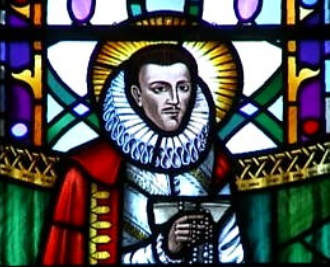
One of the Forty Martyrs of Philip languished in the England and Wales. Philip Tower until his death at the was the earl of Arundel and age of thirty eight. Surrey and, although a Beatified in 1929, he was Catholic, led a religiously included among the English apathetic life until his martyrs canonized in 1970 personal conversion, after by Pope Paul VI. which he was a zealous St Philip is the Patron of Catholic in the midst of the Diocese of Arundel & Elizabethan England. Arrested by authorities, he was placed in the Tower of London in 1585 a n d condemned to death in 1589. The sentence was never carried out, and Brighton.
By Webmaster • October 16, 2026
The musings of one of God’s smallest creatures on events in and around the Parish over the past seven days . . . .  Second week into his holiday now, and I hope that he is beginning to feel the benefit of no phone calls, no doorbells, no questions . . . . . .
By Webmaster • October 9, 2026
Matthew’s Gospel was written about 50 years after Jesus walked the earth, and it gives us glimpses into the issues of the early Christian community of the day. Jesus’ parable of the wedding feast would have helped explain to Matthew’s audience the reality that some people accepted Jesus and his message while others did not. God issued invitations to a heavenly banquet through the prophets in the Old Testament (the servants in the parable), but they ignored them. Then God sent Jesus, who again invited people to live in the Reign of God (not just in a distant afterlife, but here and now on earth). Jesus was “mistreated” and “killed” by some of the invited guests (the chief priests and Pharisees). The reference to the enraged king sending troops, destroying the murderers, and burning their city is probably a reference to the Roman troops who burned down Jerusalem and destroyed the Jewish temple in the year 70 AD, about a decade before Matthew recorded this parable. Matthew, and other early Christians, seemed to interpret this destruction as punishment for Israel rejecting Jesus and his Good News. The ones who accepted a belated invitation to the wedding feast represented those on the margins of Judaism (tax collectors, sinners, prostitutes, etc.) as well as Gentiles. They became followers and received Jesus with joy and gratitude.  The final verses about the wedding guest without the proper garment may have originally been a separate parable. The garment seems to have some symbolism that is lost to us today. We are left with the question of how someone who wasn’t expecting an invitation to a wedding banquet would have the proper clothes on in the first place. Questions of the Week  What is your first impression of this Gospel passage?  When have you experienced a joyous coming together of unlikely people responding to something good in life?
By Webmaster • October 9, 2026
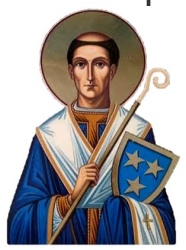
Born in 634, St. Wilfrid was educated at Lindesfarne and then spent some time in Lyons and Rome. Returning to England, he was elected abbot of Ripon in 658 and introduced the Roman rules and practices in opposition to the Celtic ways of northern England. In 664, he was the architect of the definitive victory of the Roman party at the Conference of Whitby. Appointed Bishop of York he laboured zealously founding many monasteries of the Benedictine Order, but he was obliged to appeal to Rome in order to prevent the subdivision of his diocese by St. Theodore, Archbishop of Canterbury. While waiting for the case to be decided, he was forced to go into exile, and worked hard and long to evangelize the heathen south Saxons until his recall in 686. In 703, he resigned his post and retired to his monastery at Ripon where he spent his remaining time in prayer and penitential practices, until his death in 709. St Wilfrid was an outstanding personage of his day, extremely capable, of unbounded courage, remaining firm even though running foul of both civil and ecclesiastical authorities.  He helped bring the discipline of the English Church into line with that of Rome. His feast day is October 12th .