Accepting Limitations . . .(First Sunday Iof Lent Year A)

Webmaster • February 20, 2026

As we move into this Lenten season of penitence, the readings for this first Sunday revolve around the themes of temptation and sin. The first reading recounts the story of the “Fall” of the first man and woman in the Garden of Eden. The second reading reflects back on that story. The Gospel reading, on the other hand, gives a glimpse of how we might be tempted yet remain faithful to God as Jesus was. It is as if Jesus’ obedience brings the first story full circle, giving us hope that we aren’t all doomed to give in to temptations to do what is wrong.


Between the first reading from Genesis when Adam and Eve eat the fruit they aren’t supposed to eat, and the Gospel reading of Jesus resisting extreme temptations in his hunger and exhaustion, we are given two examples of how to deal with our own temptations. Adam and Eve were seemingly set up for an easy, blissful life with all they needed and more at their disposal. Yet the slightest suggestion from the serpent that they shouldn’t be limited in what they had or in their power and knowledge was all it took for them to decide they knew better than God. How often we give in so easily when presented with options for more things even though we already have enough!


On the other hand, Jesus was in extreme physical need when he resisted the devil’s temptations to feed himself and claim power. He had more reasons to give in, and most of us would be understanding if he did. But rather than grasp at physical comfort, reassur ance, and strength, he chose to remain vulnerable and humble, even frail. When God became human in Jesus, he chose to be fully human and endure human limitations, from his 40 days in the desert all the way through to his agonizing death.


What is the lesson here then? Perhaps it is about not grasping for more things, more power, or more security, but trusting we will be cared for, even in our vulnerabilities and need. Jesus accepted and lived with his human limitations. Certainly, it’s uncomfortable and oftentimes outright painful to have physical, emotional, and intellectual limits as we live out our lives in imperfect bodies in an imperfect world. God isn’t a masochist who wants us to be in pain and need, any more than God wanted that for Jesus, but Jesus shows us there is dignity in being limited, and there is strength in needing God.


Questions of the week

 In what areas of your life are you most vulnerable to being tempted into choosing something that is not good for you?

 How might you call upon the support of God and others to resist temptations this Lent? 
By Webmaster February 20, 2026
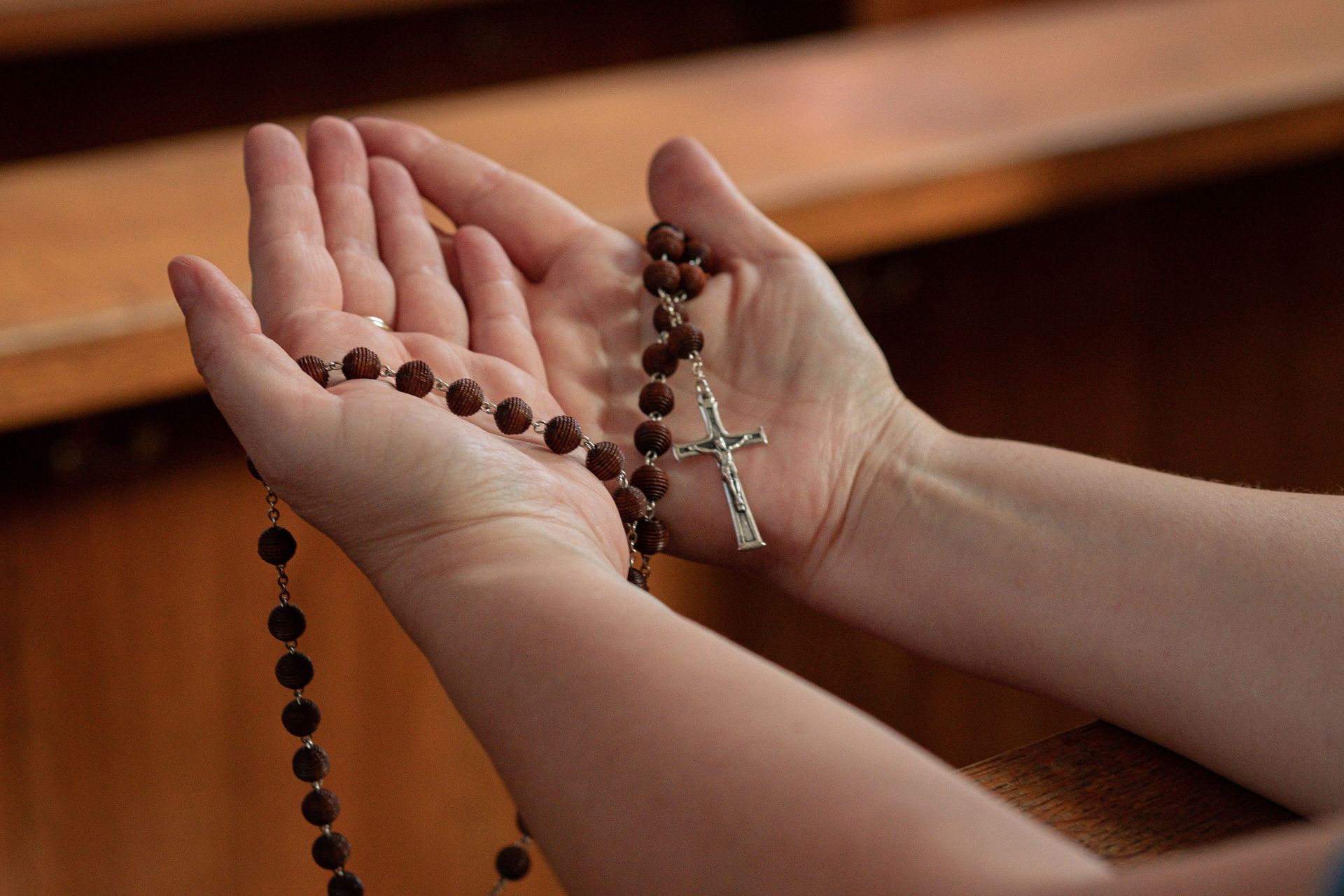
Prayer is the cornerstone of our relationship with God. Through prayer, we open our hearts and minds to his presence, seeking guidance, strength, and grace. During Lent, we are called to deepen our prayer life, setting aside dedicated time to talk with the Divine. Whether through traditional prayers, meditation, or contemplative silence, prayer allows us to align our will with God's and draw closer to Him in intimacy and trust. Fasting , or self-denial, is a way to detach ourselves from worldly comforts and desires. By voluntarily abstaining from certain things, we create space to focus on spiritual nourishment and dependence on God. Fasting reminds us of our reliance on God for sustenance and helps us cultivate self-discipline and selfcontrol, a tangible expression of our willingness to sacrifice for the sake of our spiritual growth and solidarity with those who suffer.  This Lent, try to go beyond giving up chocolate. People try cold showers, or giving up social media, gossiping, and even… swearing! Some even try bread and water or total fasts on Wednesday and Thursday. Don’t make it extreme but think about making it count! Almsgiving , or acts of charity and generosity, reflect the love and compassion of Christ. During Lent, we are called to reach out to those in need, sharing our blessings with others and embodying the spirit of solidarity and service. Almsgiving extends beyond material goods; it includes acts of kindness, forgiveness, and reconciliation. Through our generosity, we become instruments of God's love, bringing hope and healing to a broken world.
By Webmaster February 20, 2026
The musings of one of God’s smallest creatures on events in and around the Parish over the past seven days . . . . So, it has begun; Fr D always says that there are Ten things to remember during Lent . . . 1. Remember the formula. The Church does a good job capturing certain truths with easy-to-remember lists and formulas: Ten Commandments, Seven Sacraments, Three Persons in the Trinity. For Lent, the Church gives us almost a slogan - Prayer, Fasting, and Almsgiving - as the three things we need to work on during the season. 2. It’s a time of prayer. Lent is essentially an act of prayer spread out over forty days. As we pray, we go on a journey, one that hopefully brings us closer to Christ and leaves us changed by our encounter with him. 3. It’s a time to fast. With the fasts of Ash Wednesday and Good Friday, meatless Fridays, and our personal disciplines interspersed, Lent is the only time many Catholics these days actually fast. And maybe that’s why it gets all the attention. “What are you giving up for Lent? Hot dogs? Beer? Jelly beans?” It’s almost a game for some, but fasting is actually a form of penance, which helps us turn away from sin and toward Christ. 4. It’s a time to work on discipline. The forty days of Lent are also a good, set time to work on personal discipline in general. Instead of giving something up, it can be taking something positive on. “I’m going to exercise more. I’m going to pray more. I’m going to be nicer to my family, friends, and co-workers.” 5. It’s about dying to yourself. The more serious side of Lenten discipline is that it’s about more than self-control - it’s about finding aspects of yourself that are less than Christ-like and letting them die. The suffering and death of Christ is foremost on our minds during Lent, and we join in these mysteries by suffering, dying with Christ and being resurrected in a purified form. 6. Don’t do too much. It’s tempting to make Lent some ambitious period of personal reinvention, but it’s best to keep it simple and focused. There’s a reason the Church works on these mysteries year after year. We spend our entire lives growing closer to God. Don’t try to cram it all in one Lent. That’s a definite recipe for failure.  7. Lent reminds us of our weakness. Of course, even when we set simple goals for ourselves during Lent, we still have trouble keeping them. When we fast, we realise we’re all just one meal away from hunger. In both cases, Lent shows us our weakness. This can be painful, but recognising how helpless we are makes us seek God’s help with renewed urgency and sincerity. 8. Be patient with yourself. When we’re confronted with our own weakness during Lent, the temptation is to get angry and frustrated. “What a bad person I am!” But that’s the wrong lesson. God is calling us to be patient and to see ourselves as he does, with unconditional love. 9. Reach out in charity. As we experience weakness and suffering during Lent, we should be renewed in our compassion for those who are hungry, suffering, or otherwise in need. The third part of the Lenten formula is almsgiving. It’s about more than throwing a few extra pounds in the collection plate; it’s about reaching out to others and helping them without question as a way of sharing the experience of God’s unconditional love. 10. Learn to love like Christ. Giving of ourselves in the midst of our suffering and self-denial brings us closer to loving like Christ, who suffered and poured himself out unconditionally on the Cross for all of us. Lent is a journey through the desert to the foot of the Cross on Good Friday, as we seek him out, ask his help, join in his suffering, and learn to love like him.
By Webmaster February 20, 2026
Please note all lenten events at Sacred Heart 
By Webmaster February 16, 2026
You might wonder why we get ashes on our foreheads for Ash Wednesday. Through all of history, ashes have been a powerful outward symbol of interior repentance and spiritual awareness. Here are some examples of ashes in the Bible: • “Therefore I disown what I have said, and repent in dust and ashes.” (Job 42:6) • “Daughter of my people, dress in sackcloth, roll in the ashes.” (Jer. 6:26) • “I turned to the Lord God, to seek help, in prayer and petition, with fasting, sackcloth, and ashes.” (Dan. 9:3) The Early Christians used ashes to show repentance as well, but not just on Ash Wednesday! After going to confession, it was common for the priest to give the person ashes on their forehead.  Catholics have been receiving ashes on Ash Wednesday since the time of St. Gregory the Great. In 1091, Pope Urban II encouraged the entire Church to use ashes on Ash Wednesday.
By Webmaster February 16, 2026
This long excerpt from the Sermon on the Mount demonstrates both how thoroughly Jewish Jesus was in his understanding of the world, and also how radical he was in his interpretation of Jewish laws. Matthew makes it clear that Jesus has great respect for his religious tradition; he has not come to throw out Jewish teachings and start a new religion. He has come to shed light on ancient teachings and to challenge people to look for and embrace the spirit behind the letter of the law.  Jesus calls out the scribes and the Pharisees who have gotten so caught up in trying to win their salvation or the favour of others by obeying the rules perfectly that they have lost sight of the original intent behind them. The Pharisees and scribes aren’t alone in their vice - there are some people in every religion who get off track in this way. Jesus wants his listeners to look deeper than the laws themselves. What is the value they are trying to uphold? How are they offering life, and a fuller life, to those who would follow them? For example, many of us can avoid murdering another human being, but none of us escapes being angry at others. Jesus is pointing out that we need to look at the root of our behaviour (anger and lust in this passage) to see where we are imprisoned. Anger, without murder, still imprisons us and the person we are angry with. Lust, even without adultery, does harm to our most intimate relationship. So let’s not let our selves off the hook like the Pharisees just because we seem to have our acts together on the surface. Let’s look for where we can invite in more freedom, compassion, and graciousness - for our sake and for the sake of everyone we are in relationship with. Questions of the week  The commandments that Jesus mentions aren’t arbitrary rules handed down on from on high just to make our lives harder. They invite us to greater freedom. Share an example of how choosing to follow a law, commandment, or teaching from the Bible has made your life better or richer in some way, even if it was difficult?  Jesus uses hyperbole in his saying “if your right eye causes you to sin, tear it out...” This is not meant literally, but is a metaphor for saying that we must give up whatever leads us to sin. Share an experience of giving up some thing in your own life which ultimately led to greater freedom.
By Webmaster February 15, 2026
WAY OF THE CROSS & SOUP LUNCHES, FRIDAYS DURING LENT - Beginning Friday 20th February helpers are required:  (1) to lead the Stations of the Cross prayers and  (2) teams of 2 to provide the soup and bread, to set up cutlery/tables in the Parish Centre. Please use the Sign-up sheet at the rear of the church.
By Webmaster February 15, 2026
Tuesday 17th February, Sacred Heart Parish Centre
By Webmaster February 13, 2026
The musings of one of God’s smallest creatures on events in and around the Parish over the past seven days . . . . Once more a busy time at The Presbytery over the past week . . . . . Our Confirmation candidates for 2026 were all present at our Saturday evening Mass as they celebrated the ‘Rite of Enrolment’ for this year’s programme. The celebration of Confirmation this year (barring no changes due to not having a bishop) will take place on Saturday 9th May at St Joseph’s, Epsom. At all of our weekend Masses we were informed by Sr Patricia about the upcoming ‘Film Matinee’ that ODN’s are having on 21 st February (next Saturday). The showing of ‘The Mission’ will take place at the Montaigne Theatre, Notre Dame School, with interval, refreshment and raffle. All proceeds going to the various mission projects that ODN’s support. On Monday evening Fr D came back early from his day off to attend a meeting of the ‘shadow’ Epsom Parish Leadership Team (clergy and laity). Most of the meeting was spent looking at the raw data from the postcards that had come from every parish in the deanery in Advent. The vast majority of comments were very positive and up-beat in nature and will feed into shaping the new larger parish (should a new bishop wish to continue with the process) in the future. There was no Morning Prayer, Mass, or Exposition on Tuesday morning as Fr D had to be in the diocesan offices early, playing host to a joint training day for the Southwark and Arundel & Brighton Tribunals. In the evening Fr D was picked up by the Esher Catenians for their Clergy and Ladies evening. When he arrived home Fr D almost forgot that he had a male guest for three nights - an education specialist from the Company of our Lady, who the sisters ask Fr D to find a bed for. On Wednesday after Morning Prayer and Mass, Fr D was putting the finishing touches to the questions at next week’s Pancake Quiz Night. This year all the questions are ‘general knowledge’ with no specialist ‘Catholic’ questions; there are, however, several questions where having a younger parishioner on the team might well be advisable! At lunchtime Fr D went to meet Fr Ruslan (Walton-on-Thames) for their monthly lunch.  Following Morning Prayer and Mass, Fr D went off down to the diocesan offices once more to continue with his marriage cases. In the evening when he returned he had a final session with the young family who will be celebrating the baptism of their child after our 11.00 Mass this Sunday . . . .
By Webmaster February 9, 2026
After a course of studies, Cyril refused the governorship of a district such as his brother had accepted among the Slavic people. Cyril went to live in a monastery where his brother Methodius had become a monk after some years after leaving a government post. A change in their lives occurred when the Eastern Emperor gave the Slavs political independence from German rule and allowed them to have their own clergy and liturgy. Cyril and Methodius undertook the missionary tasks involved. Cyril’s first work was to invent an alphabet, still used today in some Eastern liturgies. Together they translated the Gospels, the Psalms, Paul’s letters and the liturgical books into Slavonic, and created a Slavonic liturgy. Their free use of the vernacular in preaching led to opposition from the German clergy. The bishop refused to consecrate Slavic bishops and priests, and Cyril was forced to appeal to Rome. On the visit to Rome, he and Methodius saw their new liturgy approved by the Pope. Cyril, long an invalid, died in Rome 50 days after taking the monastic habit. Methodius continued his mission work for 16 more years. He was papal legate for all the Slavic peoples, and consecrated a bishop. Since much of their territory was removed from their jurisdiction, the German bishops retaliated against Methodius. This resulted in Methodius being exiled for three years. Pope John VIII secured his release. He died on the Tuesday of Holy Week, surrounded by his disciples, in his cathedral church.  In 1980, Pope John Paul II named them additional co-patrons of Europe.
By Webmaster February 6, 2026
The musings of one of God’s smallest creatures on events in and around the Parish over the past seven days . . . . The Presbytery is now back to a steady rhythm or normal timetable as we enter the fifth week of the first section of Ordinary Time this year. However, Lent is fast creeping up on us (Fr D has noticed that Easter Eggs are ‘front and centre’ in the shops - ready for the shop keepers to make their money! At our 11.00 Mass last Sunday we again welcomed our First Eucharist candidates and learnt that they had been looking at that section of the Mass that we call the ‘Liturgy of the Word.’ To make this, during the Mass they were presented with their own copy of the Gospel that we are reading at Sunday Masses this year, the Gospel of Matthew. When they had met with Fr D on the Saturday morning they had been talking about how important it was to listen in life and at Mass; Fr D told them that it was no mistake on God’s part that we had two ears and only one mouth - so we should be listening twice as much as speaking! After Morning Prayer, Mass, and Exposition Fr D was not having to rush off to the diocesan offices because his secretary was off with flu (too much fraternising with her grandson a nursery student!). This worked well as Fr D had received an email in the morning from the lighting engineers who visited the church last Friday containing the write up of what they had discussed. They will now come and complete a full survey of the lighting system (wiring, Lumières, switching and the ‘brain’ under the stairs). This will take about half a day and at the end of it (when it is darker outside) they will show some possible modern led replacements for our present halogen units. In the evening Fr D met with the Parish Finance Committee to review last years figures and look at what is happening now that we are losing our bishop and what this might mean for the work of the Finance Committee. On Wednesday evening Fr D met with our Confirmation candidates in the Parish Centre for the second of their sessions (the Holy Spirit and Confirmation). They also spoke about the possibility of taking on a confirmation name when they are confirmed in May and were encouraged to look in the school libraries for a Book of Saints Names or on the internet, to learn a little about what their chosen saint did to become a saint.  On Thursday afternoon Fr D was in Eastbourne for a meeting of the Bosco Catholic Education trustees, this was taking place at a school that was coming up to its first anniversary of joining the trust . . .