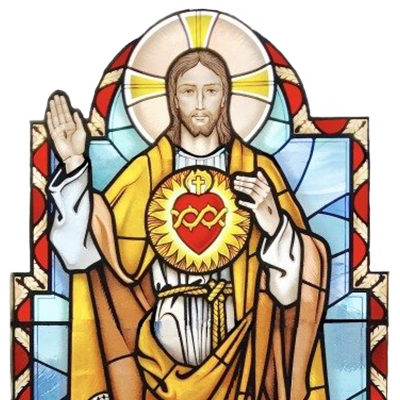
Easter Tridium
Webmaster • March 22, 2024
Sunset on Holy Thursday to sunset on Easter Sunday is considered the most solemn April. part of the liturgical year. This three-day period is referred to as the Easter Triduum, also known as the Sacred Triduum, or Paschal Triduum.
The word “triduum” comes from the Latin word triduum, which comes from tris (“three”) + dies (“day”).
Basically, the Sacred Triduum is one great festival recounting the last three days of Jesus’ life on earth, the events of his Passion and Resurrection, when the Lamb of God laid down his life in atonement for our sins.
"Though chronologically three days, they are liturgically one day unfolding for us the unity of Christ's Paschal Mystery" (United States Conference of Catholic Bishops).
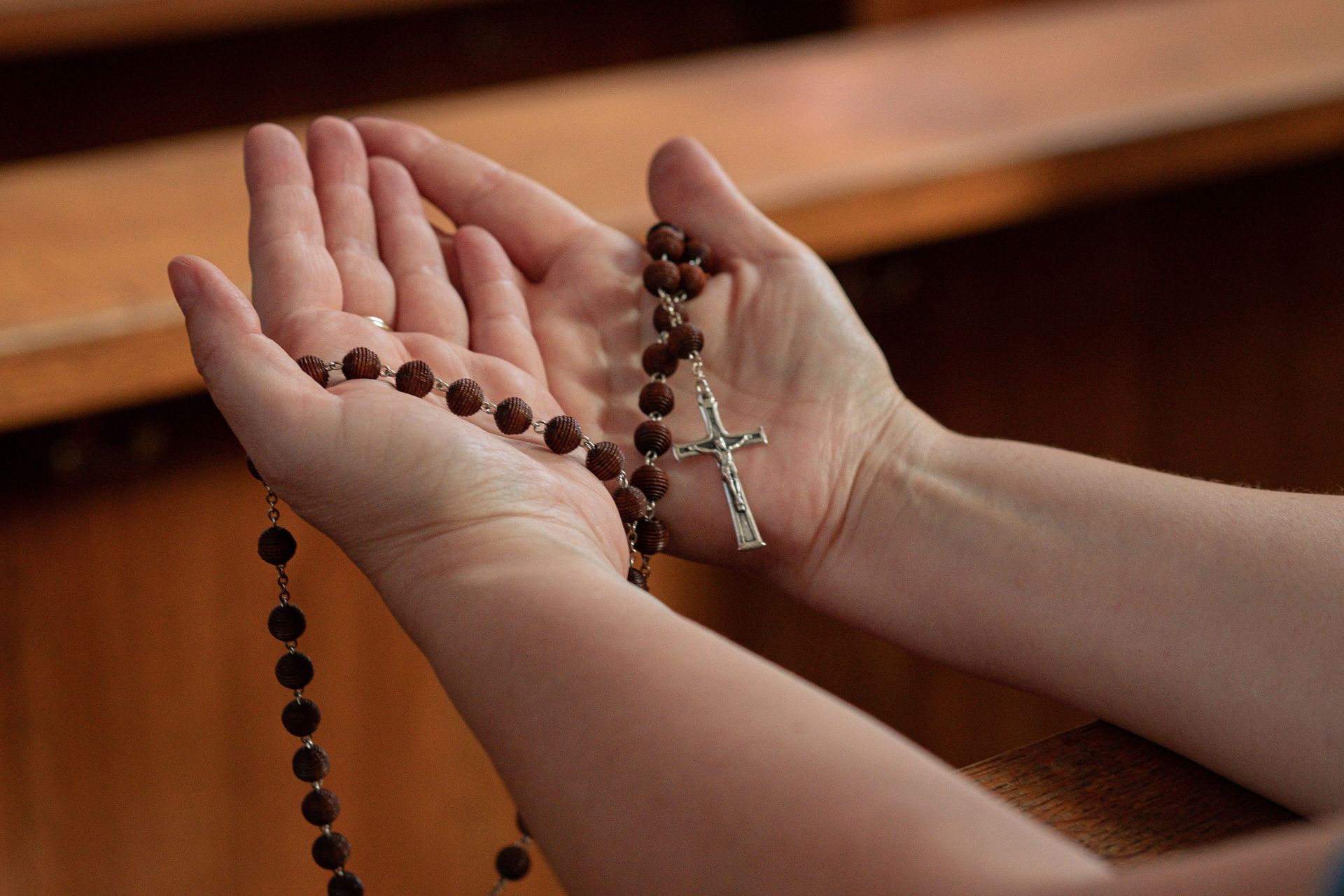
The feast day of Our Lady of the Rosary is 7th October. The month of October each year is dedicated to the Holy Rosary. It was instituted to honour the Blessed Virgin Mary in gratitude for the protection that she gives the Church in answer to the praying of the Rosary. The feast was introduced by Pope St Pius V in the year 1571 to commemorate the miraculous victory of the Christian forces at the Battle of Lepanto on 7th October 1571. The pope attributed more to the ‘arms’ of the Rosary than the power of cannons and the valour of the soldiers who fought there. The Rosary as a form of prayer was given to St Dominic by Mary, the Mother of Our Lord, who entrusted it to him as an aid in the conflicts with the Albigensians. The Dominican pope, St Pius V, worked to further the spread of the Rosary and it became one of the most popular devotions in Christendom. It was the same Pope St Pius V, who in 1569, formally approved the Rosary in its present form. It had been completed by the addition of the second half of the ‘Hail Mary’ and the ‘Glory be to the Father’ at the conclusion of each mystery. In the Middle Ages it came into being in various medieval monasteries as a substitute for the Divine Office for the lay monks and devout lay persons who did not know how to read. Instead of the 150 psalms, they would pray 150 ‘Our Fathers’ counting them on a ring of beads known as the crown or ‘corona.’ With the growth in popularity of Marian devotion in the twelfth century, the ‘Psalter of the Blessed Virgin Mary’ developed substituting 150 ‘Hail Marys’ in place of the ‘Our Fathers.’ The 150 ‘Hail Marys’ were subsequently subdivided into fifteen decades, with each decade referring to an event in the life of Jesus and Mary. These were further divided into episodes in the history of salvation, the joyful, sorrowful and glorious mysteries. Pope Leo XIII strongly promoted the increase of devotion to the Blessed Mother by encouraging the constant use of the Rosary. Beginning on 1 September 1883, with Supremo Apostolatus Officio, he wrote a total of eleven encyclicals on the Rosary, ending with Diuturni Temporis in 1898. Other popes have contributed to increase devotion to the Rosary by their writings. In the recent past, Pope Paul VI devoted the last section of his Apostolic Exhortation Marialis Cultus to the Angelus and the Rosary (MC 40-55). He wrote that “the Rosary retains an unaltered value and intact freshness.” The Rosary is primarily a scriptural prayer. This can be summarised by the traditional phrase used by Pope Pius XII that the Rosary is “a compendium of the entire Gospel.” The Rosary draws its mysteries from the New Testament and is centred on the great events of the Incarnation and Redemption. Please join together in the Rosary (at home) drawing closer to Jesus and Mary by meditating on the great mysteries of our salvation. When Fr D returns from his holiday we will celebrate one decade of the rosary after our weekday Masses on Wednesday, Thursday, and Friday (if there is no Requiem Mass)
We have, as a parish, been allocated FIVE places at the Mass of Welcome for Bishop Elect Stephen which will be taking place at Worth Abbey on Saturday 24th October at 11.30. Given the timing of the event we suggest that you bring along a packed lunch. Travel to the event will only be by the organised coach that the diocese has arranged. For us, this will be departing from Our Lady of Sorrows, Effingham at 09.25. Return will also be to Our Lady of Sorrows but we have no timings for this. There is a reasonable amount of parking at Our Lady of Sorrows church. Those interested need to use the following link (first come first served) www.abdiocese.churchsuite.com/events/efcepzky?tickets=JROo Successful ticket applications should receive an email.
This map is to show the old and new times in each community of Epsom Deanery commencing 28/29 Nov 2026
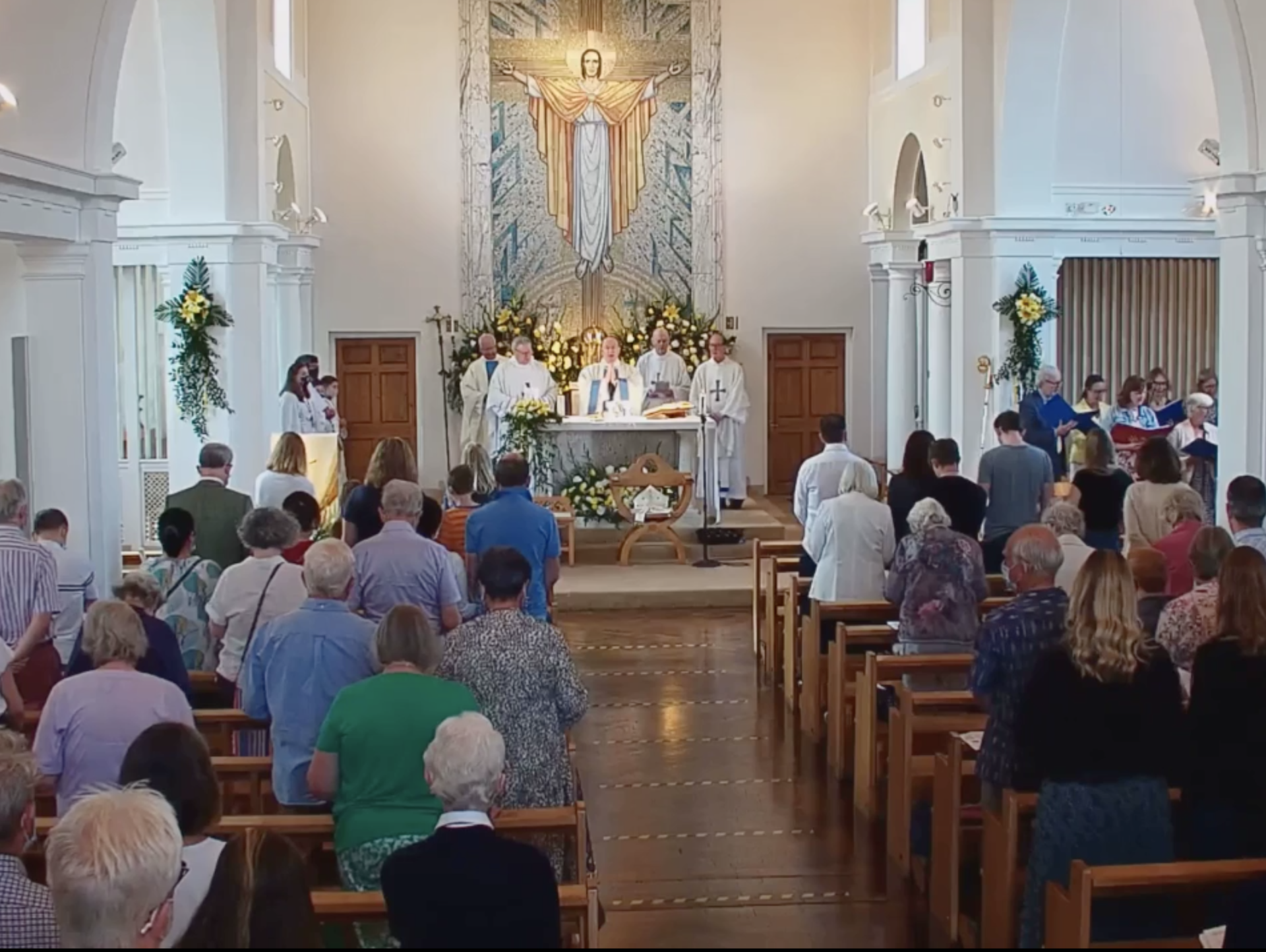
The musings of one of God’s smallest creatures on events in and around the Parish over the past seven days . . . . Hugely busy week around The Presbytery this time as Fr D had both an ‘In-Service’ day with the rest of the priests of the diocese (Tuesday) and a Requiem Mass for his old housekeeper in Reigate (Wednesday). These were coupled with the electrician coming to deal with some minor improvements in the house, church, and Parish Centre, getting his bits of the Newsletter ready, and (washing) packing to go away meant that he was scrambling for time. Fr D was also acutely aware that the announcement of new Mass times whilst he was away was not the way he would have liked things to be, but all the clergy had agreed that the announcement of the new timings of Mass would be made on this weekend in every community in the Epsom Deanery; not ideal but the best that he could arrange. To this end there is a map in the newsletter showing the old and new times in each community and also a written A5 Flyer to go with the newsletter, please remember to take one home with you as well as the Newsletter (if you do not get it electronically by email). The clergy have been working on the new timetable since June and have spent several meetings in conversation with one another (as well as much prayer). There were several principles that they wanted to maintain in order to make the new timetable as pastoral as possible whilst recognising the new situation that we are all in: Saturday Vigil Masses are always counted as Sunday Masses Taking account of Fr Charles Howell leaving the area to go on a sabbatical (knowing that he will not be returning nor being replaced) Taking account that we have two priests who will be retiring in the near future (and are unlikely to be replaced) Minimum of two hours between the Masses a priest celebrates on a Sunday A Priest can celebrate a maximum of three Masses on a Sunday The necessary changes should be made now and not piecemeal over the next few years Trying to value the important connection between priest, people, and place Working together to share the impact of the changes that are necessary Our own community will be losing the 18.00 Saturday evening Mass and Fr D will be celebrating a 18.00 Saturday evening Mass in Effingham . . . . . .
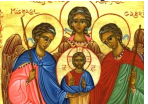
Michael means, "Who is like God?" Of the three archangels mentioned by name in the Bible, St Michael the Archangel is mentioned the most. He is found in the Old Testament in Daniel 10:13-21, 10:21, 12:1, and in the New Testament in Rev. 12:7- 9 and Jude 1:9. St Michael is most known for doing battle against Lucifer (who could have been a seraph) and casting him and the other fallen angels out of heaven. Because of this feat, he is known as the leader or prince of the angels. St. Michael is the champion of God’s people and the protector of the Church. Also regarded as the angel who brings the souls of men to their judgment before God, thus being the angel of judgment. Gabriel means "Power of God." St Gabriel the Archangel is mentioned the most in the Bible after St. Michael. He is found in the Old Testament in Daniel 8:15 -26 and 9:21-27, and in the New Testament in Luke 1:11-38. St Gabriel is most known for his role in the Annunciation. He is the angel who appeared to Zachariah and the Blessed Virgin Mary announcing the birth of St John the Baptist and Incarnation of Jesus Christ, respectively. He is also believed by some to be the angel who appeared to St. Joseph and the shepherds at Christ’s nativity. Raphael means "God has healed" is only mentioned once in the Bible, in Tobit chapter 12. Here he was a companion, protector, and healer. He is also believed to be the angel who stirred the water in the pool of Bethesda in Jerusalem, giving it its healing properties. He therefore is regarded as a healing angel and a companion angel.
All three readings today give advice and encouragement for every person to live an upstanding life. The first reading from Ezekiel does this by way of a threat that was in keeping with how the ancient Jews thought of life and death. The idea of everlasting heaven and hell hadn’t developed yet, so they didn’t believe in the afterlife as we do. They thought that if you don’t live a just and virtuous life, your punishment would be an early death. On the flip side, if you lived well, you would earn yourself a longer life. It’s not hard to imagine how that thinking developed into the Christian understanding that how we live on earth will determine our fate for the afterlife. Jesus, and later St. Paul, expanded on this idea by stressing that God’s mercy and grace reach beyond human behaviour. We don’t earn our salvation - God grants it. Jesus’ parable seems straight-forward. It’s better for a child ultimately to do what he or she was asked, even if they didn’t agree to it initially. The chief priests and elders knew right away that is the preferred outcome compared to a son who promises something but doesn’t follow through. So what is the point of the parable? It seems so obvious. The kicker comes when we think about who Jesus is addressing here. He is talking to the chief priests and elders, the ones who thought they were the good ones, the righteous ones, the virtuous, chosen ones who deserved to be handed the Kingdom of Heaven because of their good behaviour. Yet he points out that when John the Baptist came preaching repentance, inclusion, and economic and social justice, they dismissed him and ignored his message. On the other hand, the tax collectors and prostitutes (people looked down upon and ridiculed by the chief priest and elders) listened and heeded John the Baptist. They had the humility to recognize they needed to ask forgiveness and change their ways, and they did. Suddenly, Jesus’ point becomes clear - it’s never too late to change our ways, ask for forgiveness, and be welcomed into the Kingdom. On the other hand, if we say we want to do God’s will, but never get around to it, we are no better than the hypocritical chief priests and elders. Questions of the Week Who do you usually relate most to - the first or second son? Why? Is there something God might be asking you to do that you are putting off or resisting?
The musings of one of God’s smallest creatures on events in and around the Parish over the past seven days . . . . We are now eagerly looking forward to the ordination of Fr Stephen Wang as the sixth bishop of Arundel & Brighton. The ordination will take place at Arundel Cathedral on Monday 19th October (the feast of our patron St Philip Howard). We look forward to working with him in the mission of proclaiming the Gospel. No doubt his ‘in-tray’ is going to be rather full to begin with, but we can expect, in due course, to his thoughts on the priorities for the Diocese and in particular on the Pastoral Plan. Also at more or less the same time Fr Charles Howell will be leaving the area to undertake a sabbatical. Our Diocesan Administrator (Canon Jonathan Martin) has explained to us that there is no plan for a priest to be appointed to Effingham and Fetcham and that the Deanery Clergy will need to work out together how pastoral provision should be offered to these communities, and indeed all the communities in the area. Although we have not yet been formally re-constituted as one single parish, served by all the priests together, we have been encouraged to think and plan in this way. This is what is meant by the concept, rooted in Canon Law, that the clergy serve in solidum. Simply put, this means that all the priests are individually and collectively responsible for the pastoral life of all, working with our deacons and lay faithful. The clergy together become the Parish Priest, or perhaps better put, the parish priests. The benefit of working together in this way is that it promotes an approach that builds collaboration and support, and where the gifts and talents of each are offered in service to the whole area. This willingness to think across the board has been evident in the discussions that the clergy have been having in the past three months about pastoral provision and the generous sense that we, and the people in our communities, should share the impact of change. As thoughts about Sunday (including Saturday vigils) Mass timings began, it seemed both sensible and wise to acknowledge that, at some point in the not-too-distant future, some of our priests will be moving into a well-earned retirement (though no dates have yet been mentioned). The clergy’s task, then, was to draft a schedule of Masses for the area that was capable of being served by eight priests (it is hoped that there will continue to be retired priests able to offer supply on occasion but this cannot be relied upon). Finally, rather than make the changes piecemeal - some this Autumn, and then more in the next couple of years - it was decided that the whole schedule should be worked now. The new Sunday schedule (due to commence on the first weekend of Advent this year 5/6 December) will be announced next weekend.
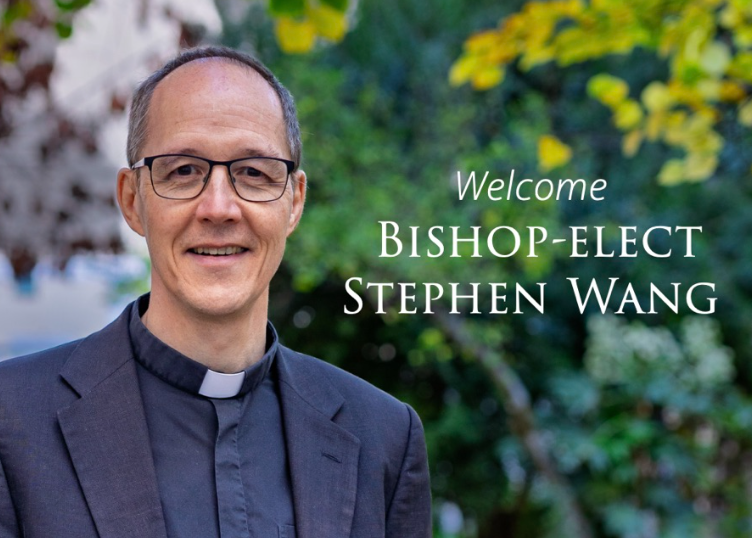
Pope Leo appointed Fr Stephen Wang as sixth bishop of our Diocese on 2nd July. In a video recorded recently: https://www.youtube.com/watch?v=jnVi7K8bWJE Bishop-elect Stephen offers a simple, practical introduction to prayer. “Prayer is wonderful,” he says, “prayer is so important, but prayer can be hard as well. How many times have people come up to me as a priest and said, ‘Father, I want to pray, but I don’t know how to start. I don’t know what to do, and I feel a bit stuck…’ “I remember the first time I prayed as an adult, I didn’t really know what to do, but I was in my bedroom. I closed my door. I sat on the edge of my bed and… just talked to God and said something like, ‘Dear God, I’m not sure if you're there. I hope you’re listening. These are the things on my heart, on my mind…’”
People across our diocesan community of faith welcomed the result of last Friday’s parliamentary vote on Assisted Suicide, which saw the Terminally Ill Adults (End of Life) Bill defeated by 286 votes to 270, a majority of 16. Every year, our diocesan Trustees approve a financial contribution to each and every hospice within the Diocese to support the care that they offer to the terminally ill.
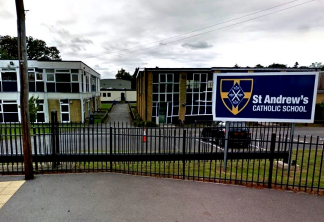
The Diocese has updated its admissions policy so that, if a Catholic school is oversubscribed, Catholic applicants may be ranked using a ‘Certificate of Catholic Practice.’ These certificate are issued by a Parish Priest to confirm that a child comes from a Catholic family regularly attending Mass on Sundays and Holy Days of Obligation over a substantial period. Catholic families are encouraged to be actively involved in the life of the Parish as part of their own and their child’s faith journey, rather than solely for the purpose of securing a school place. Therefore those who will be applying for their child to have a place in a Catholic Secondary School in September 2028 (and beyond) will need to bring along a passport sized photograph of their child to obtain a ‘Celebrating Attendance at Mass' card from the Parish Office. To celebrate attendance, these cards will need to be stamped after each Sunday Mass (including the Saturday Vigil), starting with the Holy Day of All Saints on Sunday, 1st November, and continuing for one year.