By Webmaster
•
October 2, 2026
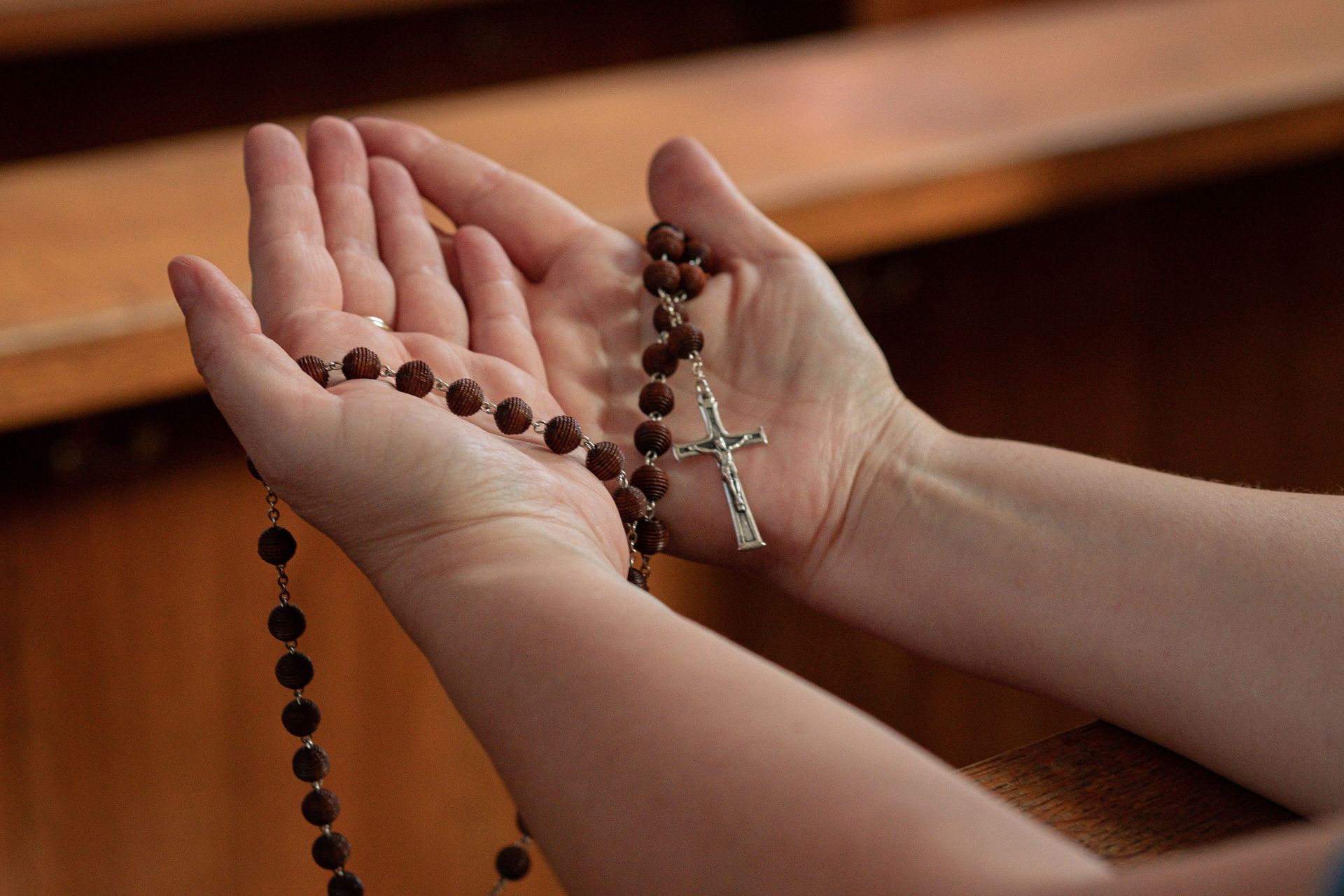
The feast day of Our Lady of the Rosary is 7th October. The month of October each year is dedicated to the Holy Rosary. It was instituted to honour the Blessed Virgin Mary in gratitude for the protection that she gives the Church in answer to the praying of the Rosary. The feast was introduced by Pope St Pius V in the year 1571 to commemorate the miraculous victory of the Christian forces at the Battle of Lepanto on 7th October 1571. The pope attributed more to the ‘arms’ of the Rosary than the power of cannons and the valour of the soldiers who fought there. The Rosary as a form of prayer was given to St Dominic by Mary, the Mother of Our Lord, who entrusted it to him as an aid in the conflicts with the Albigensians. The Dominican pope, St Pius V, worked to further the spread of the Rosary and it became one of the most popular devotions in Christendom. It was the same Pope St Pius V, who in 1569, formally approved the Rosary in its present form. It had been completed by the addition of the second half of the ‘Hail Mary’ and the ‘Glory be to the Father’ at the conclusion of each mystery. In the Middle Ages it came into being in various medieval monasteries as a substitute for the Divine Office for the lay monks and devout lay persons who did not know how to read. Instead of the 150 psalms, they would pray 150 ‘Our Fathers’ counting them on a ring of beads known as the crown or ‘corona.’ With the growth in popularity of Marian devotion in the twelfth century, the ‘Psalter of the Blessed Virgin Mary’ developed substituting 150 ‘Hail Marys’ in place of the ‘Our Fathers.’ The 150 ‘Hail Marys’ were subsequently subdivided into fifteen decades, with each decade referring to an event in the life of Jesus and Mary. These were further divided into episodes in the history of salvation, the joyful, sorrowful and glorious mysteries. Pope Leo XIII strongly promoted the increase of devotion to the Blessed Mother by encouraging the constant use of the Rosary. Beginning on 1 September 1883, with Supremo Apostolatus Officio, he wrote a total of eleven encyclicals on the Rosary, ending with Diuturni Temporis in 1898. Other popes have contributed to increase devotion to the Rosary by their writings. In the recent past, Pope Paul VI devoted the last section of his Apostolic Exhortation Marialis Cultus to the Angelus and the Rosary (MC 40-55). He wrote that “the Rosary retains an unaltered value and intact freshness.” The Rosary is primarily a scriptural prayer. This can be summarised by the traditional phrase used by Pope Pius XII that the Rosary is “a compendium of the entire Gospel.” The Rosary draws its mysteries from the New Testament and is centred on the great events of the Incarnation and Redemption. Please join together in the Rosary (at home) drawing closer to Jesus and Mary by meditating on the great mysteries of our salvation. When Fr D returns from his holiday we will celebrate one decade of the rosary after our weekday Masses on Wednesday, Thursday, and Friday (if there is no Requiem Mass)