Parish Christmas Bazaar 2021

Webmaster • November 5, 2021


Saturday 27th November

10.00 & 13.00

Sacred Heart Parish Centre


CHRISTMAS GRAND DRAW - We would now like to encourage parishioners to return their sold and unsold Grand Draw Tickets (unless you still have plans to sell them!), along with ticket counterfoils and money. Please gather all together in a sealed envelope with ‘Christmas Draw’ written on the outside and place in the Presbytery letter box or hand in at the Parish Office (Mon.-Fri. 09.30-12.30). Many thanks to all those who have undertaken to sell these tickets in order to help make the event a success.


Don’t forget - if you are the seller of the winning ticket [with the counterfoils correctly completed] there will be a ‘sellers prize’ awarded!!


One of the BIGGEST money spinning stalls at the Bazaar is always the Bottle Tombola; parishioners can help with this stall by donating bottles (wine, fizzy pop, beer, spirits, fortified wines, squash, cordial, etc.) - please make sure that they are within date and have not had the seal broken. The donated bottles should be brought along to the Parish Office (during office hours) where Sarah will look after them carefully.


Other stalls that will make up the Bazaar for which we ask for donations of stock are Jewellery, Bath & Beauty, Glass/Silver/China, Gifts, Craft Stall, Books (no stock needed thank you), Pick a Straw (sweets for the children required), Refreshments, Repository, and Door.

Stock for these stalls should be dropped off at St Matthew’s Room in the Parish Centre on Sunday’s between 10.00 and 11.00.


There will also be a Cake stall where we suggest that families take the opportunity to bake a cake together, cover it with cling film, and deliver it to the Parish Centre on the afternoon of Friday 26th or 09.15 on Saturday morning 27th November.
By Webmaster September 12, 2026
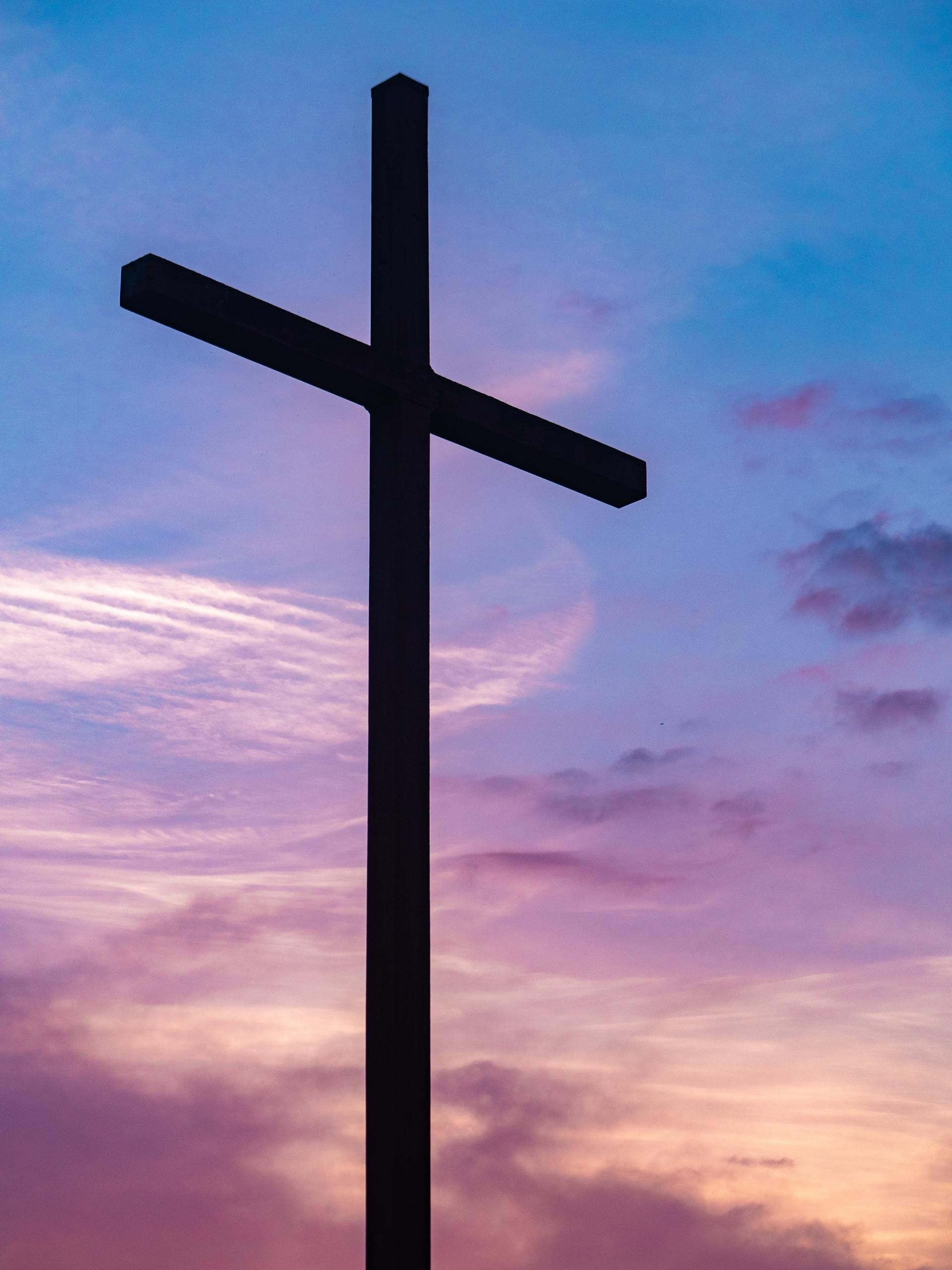
Early in the fourth century, St Helena, mother of the Roman Emperor Constantine, went to Jerusalem in search of the holy places of Christ’s life. She razed the second-century Temple of Aphrodite, which tradition held was built over the Saviour’s tomb, and her son built the Basilica of the Holy Sepulchre on that spot. During the excavation, workers found three crosses. Legend has it that the one on which Jesus died was identified when its touch healed a dying woman. The cross immediately became an object of veneration. At a Good Friday celebration in Jerusalem toward the end of the 4th century, according to an eyewitness, the wood was taken out of its silver container and placed on a table together with the inscription Pilate ordered placed above Jesus’ head: Then “all the people pass through one by one; all of them bow down, touching the cross and the inscription, first with their foreheads, then with their eyes; and, after kissing the cross, they move on.”  The feast entered the Western calendar in the 7 th century after the Emperor Heraclius recovered the cross from the Persians, who had carried it off in 614, fifteen years earlier. According to the story, the emperor intended to carry the cross back into Jerusalem himself, but was unable to move forward until he removed his imperial garb and became a barefoot pilgrim.
By Webmaster September 12, 2026
Jesus was an extraordinary teacher, but most of his teachings weren’t “new” or “original;” he drew them from the wealth of his Jewish traditions and scripture. We see an example of this today in his teachings about forgiveness after reading from Sirach’s instructions on the subject. Sirach wrote about 150-200 years before Jesus’ time. On his part, Sirach based some of his teachings on wisdom from even earlier in Jewish history. This is the second week in a row we read some of Jesus’ teaching about the importance of forgiveness. Peter’s question about how many times we must forgive someone else (seven times?) suggests that in their day people struggled with what some of us still struggle with today - forgiving others only to be repeatedly hurt and disappointed again. We get the sense that Peter may have thought he was generous in offering to forgive someone seven times. Jesus’ answer, which can be translated either as “77 times” or “70 times seven times,” would have been shocking - as it probably still is to us today. Surely the point isn’t the exact number of times we forgive because if we are keeping count, we aren’t entirely generous and free with our forgiveness. Jesus’ point is not the number of times we forgive, but the “quality” of our forgiveness. If we imagine God keeping track of how many times we are forgiven, it will detract from the mercy. So if we want to be forgiven fully and freely, we are asked to do the same for others. The parable about the merciless official which follows fleshes out the spirit of forgiveness that God displays and which Jesus asks us to reach for. The closing warning or threat of punishment for those who do not forgive suggests how seriously Jesus wants his listeners to take this issue. We may not like the image of a Father God who will torture those who are not merciful, but it serves to wake us up to the graveness of the issue at hand. Questions of the Week  Are there situations or people whom you find easier to forgive, and those whom you forgive repeatedly?  Reflect on an experience of struggling to forgive someone, perhaps for a very long time, but then finding the freedom to do so. How did it change you?
By Webmaster September 12, 2026
The musings of one of God’s smallest creatures on events in and around the Parish over the past seven days . . . . A busy week around The Presbytery as Fr D has been attempting to chase up various diocesan people, works contractors, and doctors for various reasons . . . . Pope Leo dedicated his Wednesday General Audience to the dignity of the human person, urging Christians to defend it in every circumstance with “the light and strength of the Gospel.” Continuing his series of reflections on the Second Vatican Council’s Pastoral Constitution Gaudium et Spes, the Pope said that recognition of fundamental human rights represents one of the most important achievements in human history. However, he warned, humanity’s journey towards the full recognition of human dignity remains incomplete, since old and new contradictions continue to obstruct it. Quoting his recent encyclical Magnifica Humanitas, on safeguarding the human person in the age of Artificial Intelligence, the Pope stressed that every human being is “planned and willed by God” for communion with Him, with others and with creation.  “Human dignity does not depend on a person’s abilities, wealth or position in life, nor on the right or wrong choices made,” he said. “Instead, it is a gift that precedes and transcends each person, endowed by God as an expression of His unfailing love.” Christ, he added, reveals the ultimate foundation of this dignity by revealing humanity to itself and making known to us our highest calling . . . .
By Webmaster September 4, 2026
LOURDES PRAYER NETWORK - MONDAYS WITH MARY - The Prayer Network offers an opportunity to extend the Lourdes experience, continuing our pilgrimage prayers and maintaining connections through the year. It consists of Assistant Chaplains and pilgrims, united in support for the intentions of our Diocese and further afield. As well as the chance to request prayers through the website and/or pray for others, it also offers a monthly online gathering led by our Lourdes Assistant Chaplains. You are warmly invited to join us for this time of prayer and reflection. All are welcome. If you would like the Prayer Network to pray for an intention close to your heart, or to volunteer to pray for others, you can email: prayer.lourdes@abdiocese.org.uk Monday, 14 - Sep-2026 19:30 - 20:10; Monday, 12 - Oct-2026 19:30 - 20:10; Monday, 09 - Nov-2026 19:30 - 20:10; Monday, 14 - Dec-2026 19:30 - 20:10.  You are welcome to include a reason for the request but there is no obligation to do so, and no personal details will be shared with anyone in the Prayer Network.
By Webmaster September 4, 2026
MASS OF WELCOME, 24TH OCTOBER, 11.30, WORTH ABBEY - Following his episcopal ordination, Bishop Stephen will celebrate a special Mass of Welcome at Worth Abbey attended by representatives from diocesan deaneries, new parishes and schools. The Diocese is providing a coach for each deanery/new parish to support participation from across our family of faith, details will be shared with parish communities shortly.
By Webmaster September 4, 2026
The Most Holy Name of Mary honours Mary’s name because it belongs to the Mother of God. Where did the devotion come from and how does the Church celebrate today? Mary’s name is important because it is an important part of our relationship with her. Whenever we ask for her intercession or pray to her, we invoke her name. St Bernard of Clairvaux writes: May her name never be far from your lips, or far from your heart … If you follow her, you will not stray; if you pray to her, you will not despair; if you turn your thoughts to her, you will not err. If she holds you, you will not fall; if she protects you, you need not fear; if she is your guide, you will not tire; if she is gracious to you, you will surely reach your destination. St Alphonsus Liguori also writes: After the most sacred name of Jesus, the name of Mary is so rich in every good thing, that on earth and in heaven there is no other from which devout souls receive so much grace, hope, and sweetness.  When we call upon Mary by her precious name, we call to the one who will always come to our aid and love us like a mother we also honour her for the greatness she has through God as Christ’s mother and the queen of the universe
By Webmaster September 4, 2026
The first reading and the Gospel reading today both address the responsibility of believers to call out and name injustice and sinfulness when they see it. In the Old Testament reading, God tells the prophet, Ezekiel, that he must speak out to dissuade wicked people from doing harm, or he will be responsible for their deaths. Likewise, Jesus gives his disciples instructions for confronting those who have done wrong. Jesus’ teaching in the Gospel reading today about reconciling someone who has sinned is a challenge for two kinds of Christians. First, it is a challenge to those in the Church community who judge others publicly - boldly proclaiming in print, from the pulpit, or in the media. It is often easier for an accuser to go public with an accusation than address the matter privately and with more humility and sensitivity first. Jesus is asking such accusers to do the hard work of personal conversation first, which may have the effect of helping the accuser to grow in understanding and acceptance of the “sinner.” (Of course, Jesus isn’t asking people to put themselves in danger to do so, for example, asking a victim to approach her rapist in private.)  Jesus’ words are also a challenge for other Christians who are too hesitant or timid to call out sinfulness and injustice when they see it. Sometimes we let injustice continue because it doesn’t hurt us directly - the sin isn’t “against” us. Interestingly, the phrase “against you” was not in most of the ancient manuscripts of this Gospel, meaning it was probably added later. So Jesus was calling on his disciples to privately point out their brother’s sin before escalating to a broader audience), regardless of whether they were directly impacted. Jesus is asking for courage here to stand up for any victim who is hurt by another’s behaviour. When a white person confronts another white person privately for a racist comment, that is the first step toward growth and reconciliation. Questions of the week  How does this Gospel reading most challenge you?  When have you had a growing experience of privately confronting someone who had sinned or being confronted privately yourself? How did it change you and the other person?
By Webmaster September 4, 2026
The musings of one of God’s smallest creatures on events in and around the Parish over the past seven days . . . . After a reasonably quiet August things really sped up very quickly after Bank Holiday Monday . . . . . . . After Morning Prayer, Mass, and Exposition on Tuesday morning Fr D shot off in the car to Notre Dame School where he celebrated Mass for all the staff during their ‘in set day.’ When he got back home he spent time preparing for his first meeting in the evening with the parents of this year’s First Reconciliation and First Eucharist children. This year we have seventeen children who are about to commence their preparations to receive these two great Sacraments during this academic year (Reconciliation, Saturday 28th November 11.00; and Eucharist, Sunday 13th June, 11.00). On Wednesday Fr D was off early, up to London for a day watching cricket with friends. This trip takes place usually once a year. Rain delayed the start and later in the afternoon bad light stopped play; but Fr D was very happy with the play that he did get to see! Following Morning Prayer and Mass on Thursday Fr D managed a ‘catch-up’ with Sarah in the Parish Office having missed her for much of the week. He was also preparing for a meeting in the afternoon. When the time of the meeting came around he joined the rest of the clergy of the Epsom Deanery as they finalised the plans they have been making for the future provision of Masses in the Epsom area now that Fr Charles (Effingham and Fetcham) is going off on sabbatical and not being replaced by another priest - this will be a permanent loss of a priest in the Deanery and the local clergy have been asked to develop a plan to deal with the situation. After the meeting had taken place Fr D was delighted with the progress that had been achieved (he actually said to Fr Tony Churchill that he thought that he had died and gone to heaven but nobody had told him - such was the unanimity of the clergy about the plan!). The clergy will now present the plan to the ‘Parish Leadership Team’ when they meet later in September before announcing it in all the Parishes at the beginning of October.  Having celebrated Morning Prayer and Mass on Friday morning, Fr D again shot off in the car to Notre Dame School where he celebrated Mass for the senior school at the beginning of their new school year. He was expecting our electrician to come for several small works around the parish plant but this had to be cancelled owing to larger project over running - the appointment will be re-arranged for a later date . . . . .
By Webmaster September 4, 2026
The issue of Assisted Suicide will return to the Houses of Parliament this month, following the failure of MP Kim Leadbeater’s Terminally Ill Adults (End of Life) Bill to make it through the necessary legislative stages in time to become law. A new Private Member’s Bill, which is broadly identical to Kim Leadbeater’s 2024 legislation, was reintroduced to Parliament by Labour MP Lauren Edwards in June, with Members of Parliament facing a vitally important vote next Friday (11th) which will determine whether Assisted Suicide moves closer to becoming law, or is rejected. The Catholic Church teaches that every human life from conception to natural death is sacred, with the dignity and value of each person central to an effective moral vision for society. Assisted Suicide is strongly opposed by the Church with bishops across Scotland, England & Wales calling for better provision and funding for palliative care which aims to manage pain and other symptoms, looking after a person’s emotional, practical, and psychological needs while supporting their loved ones. Speaking in July, Prime Minister Andy Burnham (who plans to abstain from September’s vote) suggested it would be difficult to implement Assisted Suicide before social and palliative care were improved. Hospices face significant financial pressures currently, with the UK Government providing around a third of the sector’s running costs and local fundraising teams expected to make up the shortfall. MP Lauren Edwards’ Bill arrives at a time when the wider National Health Service (NHS) is in crisis. Patients are facing increasing delays in seeing General Practitioners (GPs), with long waiting lists for treatment and support services – not least for mental health. The strong arguments being made in favour of Assisted Suicide don’t answer the right question; we must protect and improve the provision of ethical end-of-life care. The vote next Friday can be won. As the previous assisted suicide bill passed the House of Commons by a small margin, only twelve MPs need to change their minds for the revived suicide bill to be defeated at its second reading. A number of MPs have already expressed reservations about bringing it back or forcing it through parliament. The Prime Minister has now said that the debate should wait until palliative and social care are properly funded. Mounting evidence from the small number of places around the world that have legalised assisted suicide show that safeguards do not work, and that changing the law can have devastating consequences. If assisted suicide becomes law, thousands of individuals will be placed at risk for years to come. One of the most effective ways to persuade MPs to oppose this dangerous bill is through physical letters or postcards from constituents asking them to vote NO to the bill.  PLEASE TAKE A POSTCARD FROM THE NARTHEX THIS WEEKEND AND MAKE A POINT OF SENDING IT TO OUR LOCAL MP TO INFORM HIM OF YOUR IMPLACABLE RESISTANCE TO THIS MEASURE.
By Webmaster August 21, 2026
The Gospel reading picks up on images of keys and a key holder from the first reading from Isaiah. Keys signify ultimate power over the palace; the one with the keys has the authority to decide who is allowed in and who is kept out. When Jesus promises Peter the “keys to the kingdom of heaven,” he raises him to a place of high authority as well. This is the Gospel passage that gives us the image of St. Peter guarding the “pearly gates” and controlling access to heaven. Matthew, Mark, and Luke all include this Gospel story of Jesus asking his disciples who the people think he is. They all include Peter’s correct answer that Jesus is the Christ, the Messiah, the Son of God. It is only Matthew’s Gospel that incorporates the next few verses upholding Peter as the foundation of the church and the “keeper of the keys” to the kingdom of heaven. Catholics look back to this story as the basis for their belief in Peter as the first pope and the idea of apostolic succession. Traditionally it has been understood that in this exchange, Jesus made Peter the primary apostle. Later, Peter transferred his authority to another man, who transferred it to another, and so on, down through all the bishops of Rome, the successive popes. Other Christians do not accept Peter’s primacy or the idea that the pope’s authority can be traced back in an unbroken line to Peter. Regardless of whether one believes in the idea of apostolic succession, it is good to note the play on words in the nickname Jesus gave to Simon. Peter in Greek is Petros, which is related to the word petra “rock.” This story suggests Peter’s ability to be a rock-solid foundation for the church.  Just a few verses after this reading, though, Jesus orders Peter, “Get behind me, Satan! You are a stumbling block to me” (Mt. 16:23), another play on Peter’s “rock” nickname. So Peter, like all human leaders, has the potential to be a solid foundation for God’s kingdom in the world, and the potential to be in opposition to that kingdom. Even though Jesus praises Peter in this story, Peter will always remain human. The same can be said for every pope we have ever had. Questions of the Week • If Peter had a “rocky” nature that had the potential for greatness, but also could pose as a stumbling block, what characteristic(s) do you have which have potential for good but also for harm? • In thinking of church leaders in your lifetime, who has demonstrated the ability to be a strong foundation for you and the greater church? How so?