Sunday 7th March

Webmaster • March 6, 2021

We find it easy to admire - even if we do not imitate - the compassionate Jesus, but an angry Jesus armed with a corded whip, driving traders and moneychangers out of the Jerusalem temple and upturning their tables may shock us. This gospel does not actually use the word ‘angry,’ but Jesus’ actions are played out against the backdrop of the ‘zeal’ of Psalm 69:10, and the burning passion of the psalmist for God and the house of God, the Temple, that Mark places in the mouth of Jesus. This is the zeal that will consume Jesus in the hot noon of Calvary.

The cause of Jesus’ anger is not so much the money exchange or animal trading in the outer court of the temple. Foreign coinage that bore pagan or imperial images could not be accepted for the half-shekel tax for the upkeep of the temple sanctuary, and so it had to be exchanged for acceptable temple currency with which to pay this tax and also buy sacrificial animals. John writes that “the Passover of the Jews was near,” and so those flocking to Jerusalem to celebrate this feast from all over the Roman Empire needed to buy the animals required for participation in the temple worship and the domestic rituals. They could do this most conveniently at the temple. Jesus is not unaware of the need for the money exchange, nor so naïve as not to know that petty pilfering and profiteering can be involved in these transactions. Something much more radical is happening: the reclamation of the holy place from marketplace to his Father’s house; from empty, atrophied ritual to living worship.

By his ‘parable in action,’ Jesus momentarily terminates the temple worship, reclaims it from chaos and commerce, and cleanses the privileged piece of creation that is his Father’s house of prayer. No doubt a few hours later the tables were again in place, animals led back in, coins exchanged - with plenty to talk about.

Yet the disturbing Jesus does not disappear from the scene; he has more ‘table turning’ to do. He stays to answer criticism of his opponents who can see no further than the temple built over forty-six years by human hands or who refuse to imagine or tolerate any alternatives to the religious practices and institutions that they consider faultless and unchangeable. In this Jesus stands in the line of the Hebrew prophets like Isaiah, Jeremiah, Hosea, and Amos, who angrily and zealously denounced triumphalism and absolutism in worship. Jesus, too, will suffer the fate of so many prophets before and after him: rejection, persecution, even death. Jesus dares to name himself as the new and living temple in which the divine presence dwells. Ultimately, the sanctuary of his body will be destroyed in his passion and death, only to be raised again in three days. It is only after these events that his disciples will remember and understand Jesus’ words.

The contemporary Church cannot consider itself beyond the reach of Jesus’ whip or overturning hands. When Church leaders connive with unjust and tyrannical civil leaders, when fundraising takes precedence over faith raising, when we refuse to tolerate or even imagine alternatives to religious practices and institutions (even when some of these are obviously in their death throws), when nostalgia for past liturgical practice resists the leading of the Holy Spirit into the future envisaged by Vatican II, then ecclesial ‘cleansing’ is needed by prophets driven by that Spirit of Jesus. And, like Jesus, these men and women may often be torn down and destroyed - but ultimately raised up by him. For us who are living stones in the temple of Christ’s Body, Lent is also a time for cleansing the deep personal sanctuary of our hearts, for driving out of our lives whatever clutters our discipleship, blocks our ears to the word of God and the prophets, and distracts us from trading justly and lovingly with the gifts God has given to us.
By Webmaster August 21, 2026
The Gospel reading picks up on images of keys and a key holder from the first reading from Isaiah. Keys signify ultimate power over the palace; the one with the keys has the authority to decide who is allowed in and who is kept out. When Jesus promises Peter the “keys to the kingdom of heaven,” he raises him to a place of high authority as well. This is the Gospel passage that gives us the image of St. Peter guarding the “pearly gates” and controlling access to heaven. Matthew, Mark, and Luke all include this Gospel story of Jesus asking his disciples who the people think he is. They all include Peter’s correct answer that Jesus is the Christ, the Messiah, the Son of God. It is only Matthew’s Gospel that incorporates the next few verses upholding Peter as the foundation of the church and the “keeper of the keys” to the kingdom of heaven. Catholics look back to this story as the basis for their belief in Peter as the first pope and the idea of apostolic succession. Traditionally it has been understood that in this exchange, Jesus made Peter the primary apostle. Later, Peter transferred his authority to another man, who transferred it to another, and so on, down through all the bishops of Rome, the successive popes. Other Christians do not accept Peter’s primacy or the idea that the pope’s authority can be traced back in an unbroken line to Peter. Regardless of whether one believes in the idea of apostolic succession, it is good to note the play on words in the nickname Jesus gave to Simon. Peter in Greek is Petros, which is related to the word petra “rock.” This story suggests Peter’s ability to be a rock-solid foundation for the church.  Just a few verses after this reading, though, Jesus orders Peter, “Get behind me, Satan! You are a stumbling block to me” (Mt. 16:23), another play on Peter’s “rock” nickname. So Peter, like all human leaders, has the potential to be a solid foundation for God’s kingdom in the world, and the potential to be in opposition to that kingdom. Even though Jesus praises Peter in this story, Peter will always remain human. The same can be said for every pope we have ever had. Questions of the Week • If Peter had a “rocky” nature that had the potential for greatness, but also could pose as a stumbling block, what characteristic(s) do you have which have potential for good but also for harm? • In thinking of church leaders in your lifetime, who has demonstrated the ability to be a strong foundation for you and the greater church? How so?
By Webmaster August 1, 2026
Application Forms for next year’s 1st Reconciliation and 1st Eucharist Programmes are now available from the Sacristy after our weekend Masses. Prospective candidates: • need to have been born before 31st August 2019, • be in at least Year 3 when schools re-commence in September, • and, of course, be attending our weekend and Holy Day Masses along with their family. It is very difficult to imagine that someone who is not presently attending our community on a regular basis could possibly be prepared and ready to receive a sacrament within the next year. Parents only (not grandparents or friends) should collect the application which needs to be completed and returned by 18.00 on 31st August 2026 (sorry, no late applications can be accepted).
By Webmaster August 1, 2026
DREAMS FOR HOPE - a local charity run by one of our parishioners (Jim Vizzini), provides beds for children in and around the Borough of Elmbridge who are suffering from bed poverty. Our local Waitrose in Cobham have chosen the ‘Dreams for Hope’ charity to take part in the Community Matters Scheme, one of only three charities to have been picked. The scheme runs from July 1st to September 30th and you can help by dropping a token into the "Dreams For Hope" box when you exit the store.  When Fr D was dropping off his tokens after a shop this week he thought that parishioners may have forgotten about the scheme - more tokens needed ! ! !
By Webmaster August 1, 2026
People from across our family of faith have welcomed comments made by the new Prime Minister Andy Burnham, on the Terminally Ill Adults End of Life Bill. The Bill - which was re-introduced to Parliament by Lauren Edwards MP in June - is due to be voted on in the House of Commons on Friday 11 th September despite strong opposition from Christian, Muslim, and Jewish groups, and significant ethical and medical concerns raised by organisations including the British Geriatrics Society, The Association of Palliative Medicine, Disability Rights UK and The Royal College of Psychiatrists. The Prime Minister affirmed his view that the funding of palliative and social care should be "fixed" before a change in the law to allow Assisted Dying (also referred to as Assisted Suicide) is considered, highlighting his belief that: “it is very challenging to introduce [the] wider debate in a context of people not receiving that care and having peace of mind about that care.” It is thought that the Government will hold a neutral position on the Bill, with people of all faiths and none who oppose the legislation urged to contact their MP before September’s parliamentary vote. Archbishop John Sherrington (lead Bishop for ‘Life issues’) said: “It is highly significant that the Prime Minister has confirmed his position about the need for proper palliative and social care ahead of the Second Reading of the fundamentally flawed Terminally Ill Adults (End of Life) Bill in September. People who are dying are vulnerable and need compassionate care and spiritual accompaniment until their last breath.”  Among the several problematic issues identified in the draft legislation: “The Bill leaves many matters unresolved regarding its practical application and its profound implications for those who are disabled or vulnerable. Rather than any consideration of assisted suicide, our society should surely be addressing the need to establish and resource a universal provision of palliative care across the country.”
By Webmaster August 1, 2026
Christian greetings and the Peace of our Lord be with you always. We would love to thank you by allowing our group to come to your church and sell our olive wood religious articles, the result of which was very beneficial and rewarding for our needy Christian families in Bethlehem. We raised a magnificent £ 2,742 . Your help is a great support for us, and for our Christian families in the Holy Land. There are not enough words to thank Fr Daryl and the parishioners of the Sacred Heart, be assured that you are always in our prayers. If anyone has missed the carvings display, it is possible to place an order online directly at www.tbng.co.uk God bless you all. Love and blessings from The Bethlehem Nativity Group
By Webmaster August 1, 2026
St John Vianney, also known as the Curé d’Ars, is considered the patron saint of parish priests. He is known for his deep devotion to the Church and his dedication to the sacrament of confession. His life inspires all priests, as he exemplified a genuinely holy priest through his humility, selflessness, and unwavering faith. Situations calling for “impossible” deeds followed him everywhere. As pastor of the parish at Ars, St John encountered people who were indifferent and comfortable with their style of living. His vision led him through severe fasts and short nights of sleep. John spent much of his time in the confessional, hearing the confessions of countless penitents. His understanding of human nature and compassion for sinners made him an effective confessor, and many experienced spiritual conversions through his guidance and prayers. He established La Providence, a home for girls. Only a man of vision could have such trust that God would provide for the spiritual and material needs of all those who came to make La Providence their home. Many miracles were also attributed to St John during his lifetime and after his death.  He became a popular figure in France and beyond, with many seeking his prayer for healing and other spiritual needs. One of his famed miracles was the ability to read parishioners solus and offer them the perfect penance for their sins.
By Webmaster August 1, 2026
The musings of one of God’s smallest creatures on events in and around the Parish over the past seven days . . . . Finally, it would appear that things are slowing down for the summer period and Fr D can start playing a bit of ‘catch-up’ and planning for the future . . . . . . Last weekend at all of our Masses we were fortunate to have someone from the ‘Bethlehem Nativity Group’ to explain something of the present situation for Catholics in the Holy Land and to display and sell some of their olive wood carvings in the Parish Centre afterwards. On Monday morning the electrician came to install an unswitched fused spur in the Parish Office ready for the security engineers on Wednesday. We are very lucky to have discovered a really good electrician who is able to complete all of these small (but important) jobs for us as we make sure that our Parish ‘plant’ is up to date and safe - keeping the wolves of Health and Safety well away from us! Having celebrated Morning Prayer, Mass, and Exposition Fr D was once more off down to the diocesan offices in Crawley to get on with his commitments at the Tribunal. At present he has two cases waiting for a judgement session that has been booked, another two cases that he is working on with a view to booking judgements, and an interview with one of his clients booked in. Early on Wednesday morning the security engineers arrived at the Parish Centre to fit a new system for access to Sarah and the Parish Office. This is necessary because Sarah is classified as a ‘lone worker’ and as such needs to control who gets into the office whilst she is working. We have been looking at these works for over a year now and have looked at several different solutions, the chosen solution consists of an electric door lock that Sarah can open from inside the office after a video conversation. Once again, this should keep the Health and Safety wolves away from us! At lunchtime Fr D was meeting Fr Ruslan (Walton-on-Thames) for their monthly lunch - a chance for them both to catch up with the latest goings on in the diocese. After Morning Prayer and Mass on Thursday Fr D spent time preparing for the funeral of a parishioner that he was celebrating on the Friday. He was also on a mission to get the newsletter started as Sarah was having a day off on the Friday.  On Friday morning Fr D celebrated a requiem Mass in the church followed by a burial at Cobham cemetery . . . . . . .
By Webmaster August 1, 2026
Poor Jesus can hardly get a break for some time to himself. When he hears that Herod beheaded his good friend and relative John the Baptist, Jesus tries to get away for awhile by heading off in a boat to a deserted place. He steps back onto land only to dis cover that the crowds have followed him. Jesus could easily be impatient and short with them in his sadness and grief, but instead, his instinctive response was to be moved with compassion for them. After he cures the sick, his next compassionate response is to keep them safe and feed them, rather than sending them off in the dark from a deserted place. Jesus knew that many, probably most, of the people who flocked to him were poor people, and this crowd would have been no different. Although the disciples suggest he send them away to “buy food for themselves,” Jesus knows many of them wouldn’t have spare change for food. His sensitivity to their situation sparks more compassion, and he feeds them until they are all satisfied.  Early followers of Jesus would have connected that miraculous feeding with the passage from Isaiah in the first reading today. “All you who are thirsty, come to the water! You who have no money, come, receive grain and eat; come, without paying and without cost (Isa 55:2). In this case, the crowd eagerly accepts Jesus and his teaching, unlike sometimes when Phari sees or other religious leaders argue and try to pick fights with Jesus. The crowd here mirrors those in the Isaiah passage. They come to Jesus, they listen to him, and they heed him. In return, they are well-fed, and they receive life (Isa 55:3). Questions of the week  Jesus experienced all the human emotions we experience. What do you imagine he was thinking and feeling when he heard John was killed?  Have you ever witnessed or heard of someone able to respond with compassion to others even in a time of their own grief? Please share.
By Webmaster July 25, 2026
OUR PARISH SUPPORTS THE COBHAM AREA FOODBANK Please can you help local people in crisis by purchasing items on the list below and placing them in the Foodbank’s collection point in the narthex when to come to Mass at the weekend? 
By Webmaster July 25, 2026
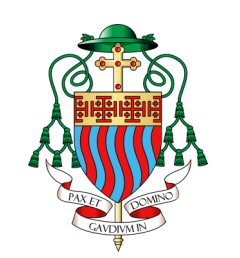
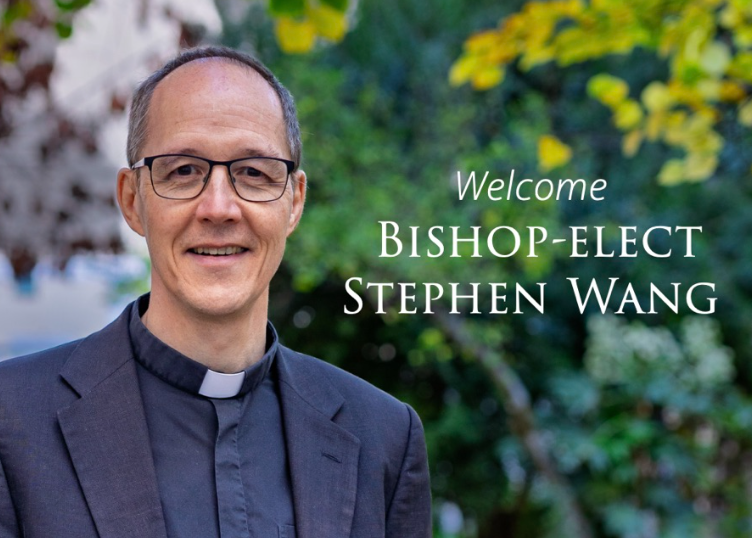
FR STEPHEN WANG WILL BE INSTALLED AS THE SIXTH BISHOP OF THE DIOCESE OF ARUNDEL & BRIGHTON ON MONDAY 19 OCTOBER AT 12 NOON - The Mass of Episcopal Ordination, which takes place on the Feast of St Philip Howard, will include invited representatives from across our diocesan family of faith and be livestreamed from Arundel Cathedral. Bishop Stephen will also celebrate a special Mass of Welcome for people across our Diocese at Worth Abbey near Crawley, on Saturday 24 October at 11.30; further details will be announced soon.