2nd Sunday of Easter

Webmaster • April 10, 2021

Thomas was not present when the risen Jesus appeared to the disciples, and so he missed out on any personal encounter with him: the words of missioning, the bestowal of the gifts of peace and forgiveness. John makes Thomas a foil for our own need of these gifts and our own struggles with doubt and faith. Often the comments about Thomas concentrate too much on him as a doubter and too little on his desire to touch the source of life. John’s gospel shows him to be the kind of person who blurts out the questions or comments others are too timid or too embarrassed to speak. He is ready to go along with Jesus en route to Lazarus’ grave and die with him (John 11:16); he is honest enough at the Last Supper to say that none of the disciples have any idea where Jesus is heading (John 14:5). The disciples to whom the risen Lord appeared that Easter evening announce the resurrection to Thomas in the same words as Mary Magdalene spoke to them: “We have seen the Lord.” And they are just as unsuccessful in convincing Thomas as Mary had been with them. Like all disciples, Thomas needs a personal experience of Jesus before he will believe. Until then, he is locked in his own criterion for faith: he wants Jesus to be “touchable.”

So, eight days later, on the next “first day of the week” according to the resurrection timeline, the risen Lord of the Sabbath stands again in the midst of his disciples, greets them with his peace, and then turns to the individual who is most in need of this. For eight days Thomas has wrestled with the dark stranger of doubt and is wounded by this struggle. The wounded, risen Jesus and the wounded disciple stand before one another. Jesus invites Thomas to stretch out his hand to the wounds of his hands and side. But there is no physical touching. Jesus’ personal presence and self -offering to Thomas touch him and demolish all his doubts. Here is “the way, and the truth, and the life” that Thomas is seeking, and he responds with the most profound and personal assent of faith in all the gospels: “My Lord and my God!” For the future generations who will listen to this gospel in the presence of the physically absent Jesus, the last beatitude that Jesus then addresses to Thomas is our greatest hope: “Blessed are those who have not seen and have believed.” It is to hand on such life-giving faith, says the evangelist, that he has written his gospel.

In his Asian Journal, Thomas Merton writes: “Faith means doubt. Faith is not the suppression of doubt. It is the overcoming of doubt, and you overcome doubt by going through it. The man of faith who has never experienced doubt is not a person of faith. Consequently, the monk is one who has to struggle in the depths of his being with the presence of doubt, and has to go through what some religions call the Great Doubt, to break through doubt into a certitude which is very, very deep because it is not his own personal certitude; it is the certitude of God himself, in us.”

Christ took his wounds into the grave and did not disown them in his resurrection. Because of his wounds, Jesus is now credibly in touch with wounded humanity: with the wounded in body and spirit, those hurt by society, the victims of domestic and global violence, those suffering from their own addictions, those abused by our disregard and complacency. And we know only too well our own woundedness. Such wounds reveal our need for one another and, therefore, the potential for the building of a compassionate, healing community that witnesses to the love of the Wounded Healer.
By Webmaster July 4, 2026
St Benedict was born into a distinguished family in central Italy, studied at Rome, and early in life was drawn to monasticism. First he became a hermit, leaving a depressing world - pagan armies on the march, the Church torn by schism, people suffering from war, morality at a low ebb. He soon realised that he could not live a hidden life in a small town any better than in a large city, so he withdrew to a cave high up in the mountains for three years. Some monks chose Benedict as their leader for a while, but found his strictness not to their taste. Still the shift from hermit to community life had begun for him. He had an idea of gathering various families of monks into one “Grand Monastery” to give them the benefit of unity, fraternity, and permanent worship in one house. Finally he began to build what was to become one of the most famous monasteries in the world - Monte Cassino. The Rule that gradually developed prescribed a life of liturgical prayer, study, manual labour, and living together under an abbot. In the course of the Middle Ages, all monasticism in the West was gradually brought under the Rule of Saint Benedict.  Today the Benedictines exist in two branches: the Benedictine Federation; and the Cistercians, men and women of the Order of Cistercians of the Strict Observance.
By Webmaster July 4, 2026
For the past several weeks, Jesus gave instructions and warnings about how challenging it is to follow him. Yet today’s reading gives the opposite impression: “come to me, all you who labour and are burdened, and I will give you rest... for my yoke is easy, and my burden is light.” Jesus’ listeners were familiar with the image of a yoke because they were used to harnessing animals to do work in the field or to pull humans in carriages or cargo on wagons. In Judaism, the yoke was also a metaphor for the religious laws spelled out in the Old Testament. Over time, religious leaders (mostly the Pharisees) added to the 613 official written laws, creating an oppressive burden for an ordinary Jewish citizen. Several times in Matthew’s Gospel Jesus, lashed out at the Pharisees for making it almost impossible (especially for poor people, who were the majority of the population) to live by all the rules, and for not lifting a finger to help them.  In contrast, Jesus simplifies all of his religion’s laws into two: love God and love your neighbour as yourself. For people struggling to keep track of hundreds of rules about how to wash your cups and utensils perfectly, what foods can and can’t be on a plate together, what kinds of clothing fibre you could or couldn’t wear, or what you could and couldn’t do on the Sabbath, having only those two laws to follow was easy and light in comparison. Instead of having to worry about whether they were breaking any rules, Jesus’ disciples could judge any decision with the measure of whether an action expressed love for God, self, and neighbour. That was the yoke Jesus was inviting them to carry - not the yoke of the Pharisees who cared more about the letter of the law than the spirit of the law. Questions of the week . . .  What religious rules or laws feel unnecessarily burdensome to you?  Does the idea of judging all of your actions and decisions by the yoke of Jesus bring you relief?
By Webmaster July 4, 2026
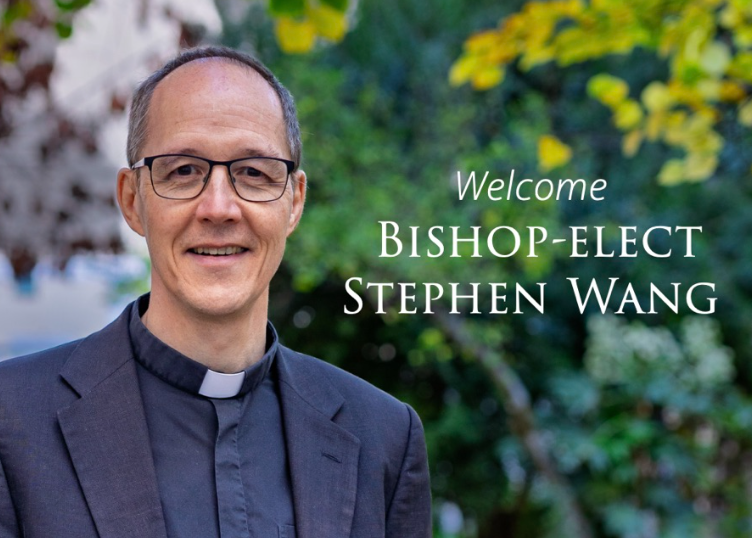
The musings of one of God’s smallest creatures on events in and around the Parish over the past seven days . . . . A few breathing spaces this week around The Presbytery as some of the independent schools start their summer holidays and others begin to enter their final weeks . . . . Our First Eucharist and our Confirmation sacramental programmes for the year came to a conclusion last weekend with Certificates given out at our Sunday morning Masses, we also celebrated the Rite of Welcome for a child who will be Baptised in the middle of July. The new applications for Infant Baptism and First Reconciliation/Eucharist for next year are now both available (instructions elsewhere in this newsletter); Confirmation applications will be available once Fr D gets a date from the diocese/Bishop as to the date of the celebration so he can sort dates for the programme. Following on from Morning Prayer, Mass, and Exposition on Tuesday morning Fr D was off in the car down to the diocesan offices to wear his ‘other hat’ in the Tribunal. He was also very grateful that the temperatures had come down to a more manageable level! Wednesday, after Morning Prayer and Mass, Fr D was able to have a ‘catch-up’ session with Sarah in the Parish Office to help make sure the ‘decks are clear’ before the summer holidays start. He was able to chase up a few minor projects that are coming to fruition and start thinking about new phases for other ongoing projects. He also made a start on his parts of the newsletter for the week - all before sitting in front of the television for the ‘BIG MATCH!’  Once again, after Morning Prayer and Mass on Thursday, Fr D went off in the car to Crawley. As he’d parked up and ‘plugged-in’ the car and entered the building he was asked if he had heard ‘the news?’ Slightly confused Fr D asked “What news?” to be told that whilst he was driving down to Crawley the Holy Father had appointed Fr Stephen Wang, the Rector of the English College in Rome as the sixth Bishop of Arundel and Brighton. At the present time his ordination will be taking place in October at Arundel Cathedral. Whilst he was at the Tribunal, workmen were dealing with a blocked drain at the back of the Parish Centre. When they got into it they found that new plastic pipework (not in a pea shingle bed, as is normally the case), put in when the Parish Centre was constructed had broken underground and roots (and frogs!) had grown in, along, and up a down pipe! Fr D asked the workmen to retrofit pea shingle around the repaired pipework that had been exposed to do the works . . . .
By Webmaster June 22, 2026
St Thomas Garnet (born 9th November 1575 – died 23rd June 1608) was a Jesuit priest who was executed in London. He is the protomartyr (i.e., the first martyr associated with a place) of Saint Omer and of Stonyhurst College. A nephew of the Jesuit Henry Garnet, he was born in Southwark, England, and studied for the priesthood St Omer in France, and at Valladolid, Spain. Initially ordained as a secular priest, he joined the Jesuits in 1604 and worked to advance the Catholic cause in Warwick until his arrest in 1606.  He was exiled after months of torture but returned again in 1607 and was very quickly arrested once more. This time was executed at Tyburn, London. Beatified in 1929, he was canonized in 1970 and is included among the Forty Martyrs of England and Wales.
By Webmaster June 22, 2026
The musings of one of God’s smallest creatures on events in and around the Parish over the past seven days . . . . A very, very busy week in and round The Presbytery as the First Eucharist programme came to it’s fruition last Sunday . . . . On Saturday morning last weekend Fr D spent time in the church with our First Eucharist families rehearsing what was going to take place at the 11.00 Mass on Sunday morning. The children were able to walk through slowly and ask questions where necessary concerning the ‘Big Day.’ They were also able to practice receiving Holy Communion with un-consecrated hosts and wine. Fr D explained to them that they should receive from the chalice on their First Eucharist and then they could choose if they wanted to do so in the future (not surprisingly none of the children liked the taste of the wine and parents laughed when Fr D said ‘long may it be so!’). At the 11.00 Mass the day after the children were wonderfully turned out (Fr D has a thing about the girls looking like meringues and boys dressed as sailors). Our newly confirmed were also present at the Mass - the boys acting as ‘ecclesiastical traffic cops’ to make sure that the families were not inundated whilst the children received communion for the first time. At the end of the Mass the children lined up outside to shake hands with everyone as they left the church, then they joined Fr D in a photo-call for the paparazzi by the hedge outside the Presbytery. Having celebrated Moring Prayer, Mass, and Exposition on Tuesday morning Fr D was off down to the diocesan offices in Crawley to continue work on another couple of cases that he is moving closer to a judgement session. At present the Tribunal has had more applications than they had in the whole of last year (and we’re not even half way through the year!). When he got back home in the late afternoon Fr D had a ‘Teams’ meeting with the ‘Standards and Ethos’ committee of the Bosco Catholic Education Trust. By the time it came to supper he was really ready to eat and stop ‘doing things.’  On Wednesday Fr D celebrated the funeral of a parishioner before the committal at Randalls Park. He then just about had time to come home, and change his shirt before heading off for his monthly lunch with Fr Ruslan (Walton-on-Thames) at a local hostelry. In the latter part of the afternoon he was preparing his parts of the newsletter before having a sandwich and settling down to watch the England match . . . . .
By Webmaster June 12, 2026
What is Gift Aid?
By Webmaster June 12, 2026
OUR PARISH SUPPORTS THE COBHAM AREA FOODBANK Please can you help local people in crisis by purchasing items on the list below and placing them in the Foodbank’s collection point in the narthex when to come to Mass at the weekend? 
By Webmaster June 12, 2026
From next weekend the new season of Sacramental Applications will be available.  Infant Baptism Applications can be obtained from the Parish Office (during the normal office hours - please remember that baptism is for Registered Parishioners only who are regularly attending our Sunday and Holy Day Masses). These should be completed and returned to the Parish Office a minimum of two weeks before the chosen course.  First Reconciliation/First Eucharist Applications can be obtained (by parents only - not friends or grandparents) from the sacristy after Sunday Mass. Please Note: it is very hard to imagine that someone who is not already a regular member of our worshipping community could possibly be ready to celebrate either of these important sacraments at this time. These too should be completed and returned to The Presbytery by 18.00 on 31st August 2026 (no late applications can be accepted, sorry).  Confirmation Applications are not available yet as the diocese has not given a date for the Confirmation Mass next year so Fr D cannot produce an appropriate schedule for the course. Once he has a date he will make details known. 
By Webmaster June 12, 2026
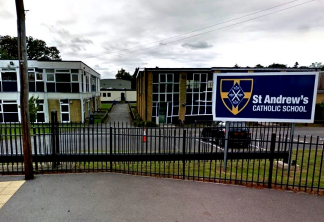
IMPORTANT NEWS REGARDING ADMISSIONS TO CATHOLIC SCHOOLS AND THE CERTIFICATE OF CATHOLIC PRACTICE Parishioners may be aware that the Diocesan Education Service has updated its model Admission Policies to bring them in line with the National Catholic Education Service and to ensure compliance with the mandatory School Admission Code which all Admission Authorities are legally required to follow. Our schools will still prioritise Catholic applicants and a certificate of Baptism will still be used to identify this. As schools adopt these new models, the requirement to seek a parish priest’s signature on the Supplementary Information Forms' (SIFs) will be removed. However, in any case where a school is oversubscribed with Catholic applicants, it will be necessary to rank further the Catholic applicants. To do this a 'Certificate of Catholic Practice' (CCP) will be used which affirms that 'this child and his/her family are known to me and, to the best of my knowledge and belief, the child is from a practising Catholic family'. (The Guidance from the Diocese, following the National Catholic Education Service model, states that for the purposes of the Certificate of Catholic Practice, a person is a practising Catholic if they observe the Church’s precept of attending Mass on Sundays and holidays of obligation.) This certificate will be needed for those applying from this autumn for a place at St Andrew’s for Admission in September 2027, and going forward. Initially, in moving to a new system, the onus will be on parish clergy to make a judgement on these matters. However, Deanery clergy and the Diocesan Education Service are working on a form for use in coming years whereby families can indicate and celebrate their participation at Mass; indeed families should regard the change as a reminder of the need to be engaged with the life of the local Church, that is, the parish – not simply because they desire a school place for their child but because it is first and foremost their faith community, because worshipping God and being fed by Christ in word and Sacrament is what we are about and because, as children of God, families want their children to be supported in their journey of faith.  All clergy are committed to supporting parishioners in the difficult task of parenting and the joyful task of sharing faith and are not oblivious to the challenges that families face. Please trust them in this new situation - but please do not put them in the awkward position of being asked to provide a certificate for someone they have hardly ever seen before.
By Webmaster June 12, 2026
Born at Wyche, Worcestershire, Richard was orphaned while a young lad, he managed to regain his fortune which had been mismanaged by others, and was educated at Oxford, Paris, and Bologna. He earned a doctorate in law from the University of Bologna and was appointed chancellor of Oxford in 1235. After accompanying Edmund Rich into retirement at the abbey of Pontigny, France, he departed the community upon Edmund’s death, taught at the Dominican house in Orkans, and was ordained there in 1243. Upon going home to England, he was named chancellor to St Boniface of Savoy. When King Henry III appointed Ralph Neville to the see of Chichester in 1244, Boniface declared the nomination invalid and named Richard to the post, an act which caused an uproar in the kingdom. Finally, in Pope Innocent IV decided in Richard’s favour, but Richard was prevented from entering his palace by the machinations, of Henry. Only after the king was threatened with being excommunicated was he able to take up his duties. He insisted upon strict discipline among the clergy, aided the poor, and denounced the corruption and vices of the contemporary Church as well as the royal court. His death came at Dover, in a home for poor priests, whilst he was delivering a plea for a crusade.  Richard was canonized in 1262, and his tomb became a popular shrine noted for its miracles up until the Reformation.