Corpus Christi Year B

Webmaster • June 5, 2021

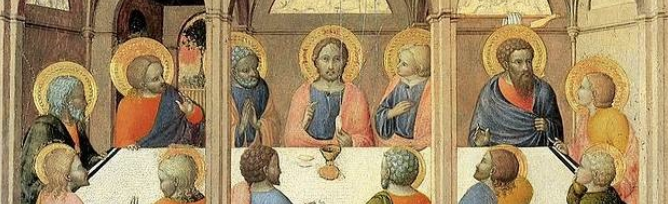
Sometimes we find ourselves in a queue with a bunch of strangers, shuffling down the aisle in church, and we forget that we are standing with our families on the pathway to heaven about to partake of the Body and Blood of Christ offered once for all time for the salvation of the world. Perhaps we have all walked down that aisle together? The sacrificial nature of the Eucharist is clear from Jesus’ words and the actions at the Last Supper, but hearing the words of institution over and over can become a rote behaviour that obscures their lifegiving meaning. In the words of Mark’s gospel, “While they were eating, he took bread, said the blessing, broke it, gave it to them, and said, “Take it; this is my body.’ Then he took a cup, gave thanks, and gave it to them, ‘This is my blood of the covenant, which will be shed for many.’ The primary sacrificial context for the Last Supper comes from the Passover feast in which the meal is situated, but the offering of Jesus’ Body and Blood on behalf of ‘many’ - that is, for all people - takes on and reinterprets much more of the sacrificial imagery of the Old Testament. The bread that he broke is a sign of his body, which he will offer in death, the true bread of the presence. The “blood of the covenant” shares in the imagery of the ceremony in Exodus in which Moses sprinkled blood on the people of Israel as a sign of their obedience to the covenant. The phrase “shed for many” draws us inexorably to the Suffering Servant of Isaiah, who pours himself out as an expiation for the sins of the people. These sacrificial realities are not alien to the Last Supper. They are an inherent part of Jesus’ actions, which he interprets for his apostles prior to the crucifixion. But for these understandings to come to the fore, the first Christians had to meditate and reflect on what Jesus had done and what this meant for the continuing life of the church. The author of the Letter to the Hebrews makes it his mission to explicate and explain what took place on Calvary in the light of the Jewish sacrificial system. He explains that Jesus is not only the sacrifice for the sins of the world but also the perfect high priest and that through the offering of himself as the perfect sacrifice, Jesus “is mediator of a new covenant: . . . Those who are called may receive the promised eternal inheritance.” Jesus’ words over the bread and wine, then sharing it with his disciples, signifies his giving them a share in the atoning power of his death. And that atoning power has as its goal eternal life with Jesus. But it was not just those who sat at the table with Jesus who are able to share in the atoning power of Jesus’ sacrifice; Jesus opened the way for all to share in the eternal inheritance.
By Webmaster June 12, 2026
What is Gift Aid?
By Webmaster June 12, 2026
OUR PARISH SUPPORTS THE COBHAM AREA FOODBANK Please can you help local people in crisis by purchasing items on the list below and placing them in the Foodbank’s collection point in the narthex when to come to Mass at the weekend? 
By Webmaster June 12, 2026
From next weekend the new season of Sacramental Applications will be available.  Infant Baptism Applications can be obtained from the Parish Office (during the normal office hours - please remember that baptism is for Registered Parishioners only who are regularly attending our Sunday and Holy Day Masses). These should be completed and returned to the Parish Office a minimum of two weeks before the chosen course.  First Reconciliation/First Eucharist Applications can be obtained (by parents only - not friends or grandparents) from the sacristy after Sunday Mass. Please Note: it is very hard to imagine that someone who is not already a regular member of our worshipping community could possibly be ready to celebrate either of these important sacraments at this time. These too should be completed and returned to The Presbytery by 18.00 on 31st August 2026 (no late applications can be accepted, sorry).  Confirmation Applications are not available yet as the diocese has not given a date for the Confirmation Mass next year so Fr D cannot produce an appropriate schedule for the course. Once he has a date he will make details known. 
By Webmaster June 12, 2026
IMPORTANT NEWS REGARDING ADMISSIONS TO CATHOLIC SCHOOLS AND THE CERTIFICATE OF CATHOLIC PRACTICE Parishioners may be aware that the Diocesan Education Service has updated its model Admission Policies to bring them in line with the National Catholic Education Service and to ensure compliance with the mandatory School Admission Code which all Admission Authorities are legally required to follow. Our schools will still prioritise Catholic applicants and a certificate of Baptism will still be used to identify this. As schools adopt these new models, the requirement to seek a parish priest’s signature on the Supplementary Information Forms' (SIFs) will be removed. However, in any case where a school is oversubscribed with Catholic applicants, it will be necessary to rank further the Catholic applicants. To do this a 'Certificate of Catholic Practice' (CCP) will be used which affirms that 'this child and his/her family are known to me and, to the best of my knowledge and belief, the child is from a practising Catholic family'. (The Guidance from the Diocese, following the National Catholic Education Service model, states that for the purposes of the Certificate of Catholic Practice, a person is a practising Catholic if they observe the Church’s precept of attending Mass on Sundays and holidays of obligation.) This certificate will be needed for those applying from this autumn for a place at St Andrew’s for Admission in September 2027, and going forward. Initially, in moving to a new system, the onus will be on parish clergy to make a judgement on these matters. However, Deanery clergy and the Diocesan Education Service are working on a form for use in coming years whereby families can indicate and celebrate their participation at Mass; indeed families should regard the change as a reminder of the need to be engaged with the life of the local Church, that is, the parish – not simply because they desire a school place for their child but because it is first and foremost their faith community, because worshipping God and being fed by Christ in word and Sacrament is what we are about and because, as children of God, families want their children to be supported in their journey of faith.  All clergy are committed to supporting parishioners in the difficult task of parenting and the joyful task of sharing faith and are not oblivious to the challenges that families face. Please trust them in this new situation - but please do not put them in the awkward position of being asked to provide a certificate for someone they have hardly ever seen before.
By Webmaster June 12, 2026
Born at Wyche, Worcestershire, Richard was orphaned while a young lad, he managed to regain his fortune which had been mismanaged by others, and was educated at Oxford, Paris, and Bologna. He earned a doctorate in law from the University of Bologna and was appointed chancellor of Oxford in 1235. After accompanying Edmund Rich into retirement at the abbey of Pontigny, France, he departed the community upon Edmund’s death, taught at the Dominican house in Orkans, and was ordained there in 1243. Upon going home to England, he was named chancellor to St Boniface of Savoy. When King Henry III appointed Ralph Neville to the see of Chichester in 1244, Boniface declared the nomination invalid and named Richard to the post, an act which caused an uproar in the kingdom. Finally, in Pope Innocent IV decided in Richard’s favour, but Richard was prevented from entering his palace by the machinations, of Henry. Only after the king was threatened with being excommunicated was he able to take up his duties. He insisted upon strict discipline among the clergy, aided the poor, and denounced the corruption and vices of the contemporary Church as well as the royal court. His death came at Dover, in a home for poor priests, whilst he was delivering a plea for a crusade.  Richard was canonized in 1262, and his tomb became a popular shrine noted for its miracles up until the Reformation.
By Webmaster June 12, 2026
Jesus is in the prime of his public ministry here as he sends the twelve apostles out to expand his work. People have been flocking to him as his reputation as a healer and great teacher grows, and he can no longer personally minister to everyone who needs his help. Upon seeing the crowds of people harassed and helpless (remember that the Jewish people lived under the brutal occupation of the Romans) Jesus knows he needs others to extend his reach. He tells his twelve apostles to pray for more helpers, even as he sends them out to continue his work. Notice that Jesus gives them the power to do everything he has been doing: proclaim the good news that the reign of God is near, cure the sick, cast out demons, and even raise the dead! Clearly, Jesus wasn’t selfish about keeping power for himself. In telling the apostles to pray for more labourers for the harvest, he suggests that others beyond their circle of twelve will be given the power to do what he was asking them to do too.  At this point, Jesus tells the apostles to focus on ministering to the community of the Jews, not expanding into Samaritan territory or Gentile (nonJewish) territory. Of course, as a life -long Jew, that seemed the expected place for Jesus and his Jewish friends to start. (That is where the Jew Paul began, too.) Later in the Gospels and the Acts of the Apostles, we will read stories of Jesus, the apostles, Paul, and later followers expanding their ministry and reach into Samaritan and Gentile communities. Questions of the week  Does it ever occur to you that Jesus might be asking you to do some of the same things he asked his twelve apostles to do? What might it look like for you to proclaim the good news, heal the sick, or cast out demons today?  Some people are called to work within and minister to the community they were born into, while others are called to move outside to a different community. What about you?
By Webmaster June 12, 2026
The musings of one of God’s smallest creatures on events in and around the Parish over the past seven days . . . . A busy week around The Presbytery as things were being finalised for the celebration of First Eucharist and Fr D was away with all the diocesan clergy on a two day in-service meeting . . . . . On Monday morning Fr D had an appointment at the garage before he picked up Fr Tony to take him along to the Clergy In-Service session for this year. Lots of talks and discussion sessions which had him come home on Tuesday afternoon exhausted! On Wednesday after Morning Prayer and Mass Fr D started work on this week’s newsletter, knowing that time was going to be tight in the latter part of the week. He also received an email from the lighting engineers agreeing to come on the week beginning Monday 6 th July to complete the ‘second phase of the new lighting system in the church; they expect these works to take the best part of the week. After Morning Prayer and Mass on Thursday Fr D checked in with Sarah in the Office before going off in the car to the diocesan offices in Crawley where he signed several decrees, including the publishing of the sentences for two cases he recently judged (there will now be fifteen days in which an appeal may be made before the sentences become final). In the evening Fr D met with the parents of a child who will be baptised next Sunday (21 st ) after the 11.00am Mass. Following Morning Prayer and Mass for the Solemnity of the Sacred Heart, our patronal feast day, on Friday Fr D finished the intercessions and notices for the coming weekend before picking up Fr Tony for a Deanery Clergy social lunch in Ewell. He thinks that this will be the last Deanery Clergy meeting until September.  On Saturday morning Fr D met with parents and their children for the rehearsal of First Eucharist Day - taking the children through what was going to happen at the Sunday 11.00 Mass . . . . .
By Webmaster June 5, 2026
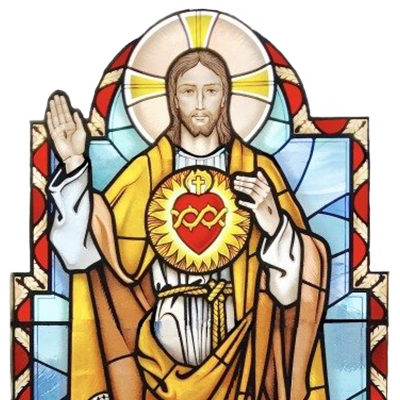
Devotion to the Sacred Heart of Jesus goes back at least to the 11th century, but through the 16th century, it remained a private devotion, often tied to devotion to the Five Wounds of Christ. The first feast of the Sacred Heart was celebrated on August 31, 1670, in Rennes, France, through the efforts of Fr Jean Eudes (1602-1680). From Rennes, the devotion spread, but it took the visions of St Margaret Mary Alacoque (1647-1690) for the devotion to become universal. In all of these visions, in which Jesus appeared to Margaret Mary, the Sacred Heart played a central role. The “great apparition,” which took place on June 16, 1675, during the octave of the Feast of Corpus Christi, is the source of the modern Feast of the Sacred Heart. In that vision, Christ asked that Margaret Mary request that the Feast of the Sacred Heart be celebrated on the Friday after the octave of the Feast of Corpus Christi. The Sacred Heart of Jesus represents not simply His physical heart but also His love for all mankind.  The devotion became quite popular after Margaret Mary’s death in 1690, but, because the Church initially had doubts about Margaret Mary’s visions, it wasn’t until 1765 that the feast was celebrated officially in France. Almost 100 years later, in 1856, Pope Pius IX, at the request of the French bishops, extended the feast to the universal Church. It is celebrated on the day requested by our Lord – the Friday after the octave of Corpus Christi, or 19 days after Pentecost Sunday.
By Webmaster June 5, 2026
There will be no Mass on Tuesday (9th) morning this week as all the clergy of the diocese are attending an annual ‘in-service’ course on Monday and Tuesday of this week.
By Webmaster June 5, 2026
The musings of one of God’s smallest creatures on events in and around the Parish over the past seven days . . . . Another full-on time this week around The Presbytery, as we prepare for our annual period of extended Exposition of the Blessed Sacrament and final preparations for our younger members to receive the Eucharist for the first time . . . . . After Morning Prayer, Mass, and Exposition on Tuesday Fr D was making an early start on his parts of the newsletter as he knew that the rest of the week was fairly full. He also spent time preparing the last session with parents before their children receive the Lord for the first time in the Eucharist (June 14th). In the afternoon Fr D continued working on the Parish Calendar for all the Sacramental Programmes for the next year (2026-7), trying to fit them around school holidays and his own diary. In the evening he met with the First Eucharist parents for the last time before the ‘Big Day!’ On Wednesday following Morning Prayer and Mass Fr D pulled together the last pieces of information for the Parish Calendar and began the work of producing the next year’s Application Forms (Baptism, First Reconciliation and First Eucharist). In the early evening Fr D had his last ‘input’ evening with our newly confirmed youngsters, reflecting on the course and the celebration of the sacrament and looking forward to ‘What’s Next.’ After Morning Prayer and Mass on Thursday Fr D was off in the car to the diocesan offices at Crawley where he wrote up two marriage case sentences that had been judged a couple of weeks ago before starting the work on another case which he will call a judgement session for later. At the present moment in time the Tribunal has received as many cases this year so far as the whole of last year produced! When he returned in the late afternoon he finished up the last of his parts of the newsletter ready to hand the rest over to Sarah in the Parish Office.  Following Morning Prayer and Mass on Friday morning Fr D made preparations for meeting with the family of a parishioner whose requiem will be celebrated here in a couple of weeks time. Whilst working in his office in the morning Fr D also emailed the church lighting engineers to schedule ‘phase two’ of the new church lighting system (this will involve the following: new LED units to light the Stations of the Cross; new LED lighting units for the wall wash lights; new LED fittings for the Altar; an LED reading lamp for the Ambo; new LED units for the ‘Quiet Room;’ a new LED unit for lighting the Stained glass window; and the Organ area lighting) . . . .