FR STEPHEN WANG AS OUR NEW BISHOP
Webmaster • July 18, 2026
PEOPLE FROM ACROSS THE DIOCESE HAVE WELCOMED THE APPOINTMENT OF FR STEPHEN WANG AS OUR NEW BISHOP - Speaking about the appointment earlier this week, Fr Stephen, expressed “gratitude, trepidation, excitement and curiosity.” In an interview, Fr Stephen highlighted the importance of getting to know the people of the Diocese: “I’m sure there’ll be a lot of time and energy to put into meeting people and getting to know them,” he said, “that will be the most important thing, along with praying with them, learning what’s going on for them, and them getting to know me as their bishop, and their friend as well.”
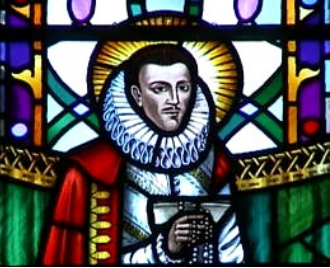
One of the Forty Martyrs of Philip languished in the England and Wales. Philip Tower until his death at the was the earl of Arundel and age of thirty eight. Surrey and, although a Beatified in 1929, he was Catholic, led a religiously included among the English apathetic life until his martyrs canonized in 1970 personal conversion, after by Pope Paul VI. which he was a zealous St Philip is the Patron of Catholic in the midst of the Diocese of Arundel & Elizabethan England. Arrested by authorities, he was placed in the Tower of London in 1585 a n d condemned to death in 1589. The sentence was never carried out, and Brighton.
The musings of one of God’s smallest creatures on events in and around the Parish over the past seven days . . . . Second week into his holiday now, and I hope that he is beginning to feel the benefit of no phone calls, no doorbells, no questions . . . . . .

Matthew’s Gospel was written about 50 years after Jesus walked the earth, and it gives us glimpses into the issues of the early Christian community of the day. Jesus’ parable of the wedding feast would have helped explain to Matthew’s audience the reality that some people accepted Jesus and his message while others did not. God issued invitations to a heavenly banquet through the prophets in the Old Testament (the servants in the parable), but they ignored them. Then God sent Jesus, who again invited people to live in the Reign of God (not just in a distant afterlife, but here and now on earth). Jesus was “mistreated” and “killed” by some of the invited guests (the chief priests and Pharisees). The reference to the enraged king sending troops, destroying the murderers, and burning their city is probably a reference to the Roman troops who burned down Jerusalem and destroyed the Jewish temple in the year 70 AD, about a decade before Matthew recorded this parable. Matthew, and other early Christians, seemed to interpret this destruction as punishment for Israel rejecting Jesus and his Good News. The ones who accepted a belated invitation to the wedding feast represented those on the margins of Judaism (tax collectors, sinners, prostitutes, etc.) as well as Gentiles. They became followers and received Jesus with joy and gratitude. The final verses about the wedding guest without the proper garment may have originally been a separate parable. The garment seems to have some symbolism that is lost to us today. We are left with the question of how someone who wasn’t expecting an invitation to a wedding banquet would have the proper clothes on in the first place. Questions of the Week What is your first impression of this Gospel passage? When have you experienced a joyous coming together of unlikely people responding to something good in life?
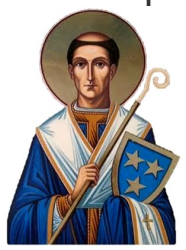
Born in 634, St. Wilfrid was educated at Lindesfarne and then spent some time in Lyons and Rome. Returning to England, he was elected abbot of Ripon in 658 and introduced the Roman rules and practices in opposition to the Celtic ways of northern England. In 664, he was the architect of the definitive victory of the Roman party at the Conference of Whitby. Appointed Bishop of York he laboured zealously founding many monasteries of the Benedictine Order, but he was obliged to appeal to Rome in order to prevent the subdivision of his diocese by St. Theodore, Archbishop of Canterbury. While waiting for the case to be decided, he was forced to go into exile, and worked hard and long to evangelize the heathen south Saxons until his recall in 686. In 703, he resigned his post and retired to his monastery at Ripon where he spent his remaining time in prayer and penitential practices, until his death in 709. St Wilfrid was an outstanding personage of his day, extremely capable, of unbounded courage, remaining firm even though running foul of both civil and ecclesiastical authorities. He helped bring the discipline of the English Church into line with that of Rome. His feast day is October 12th .
The musings of one of God’s smallest creatures on events in and around the Parish over the past seven days . . . . Well, he has been away on his holiday for a week now, although I have yet to receive a post card . . . . .
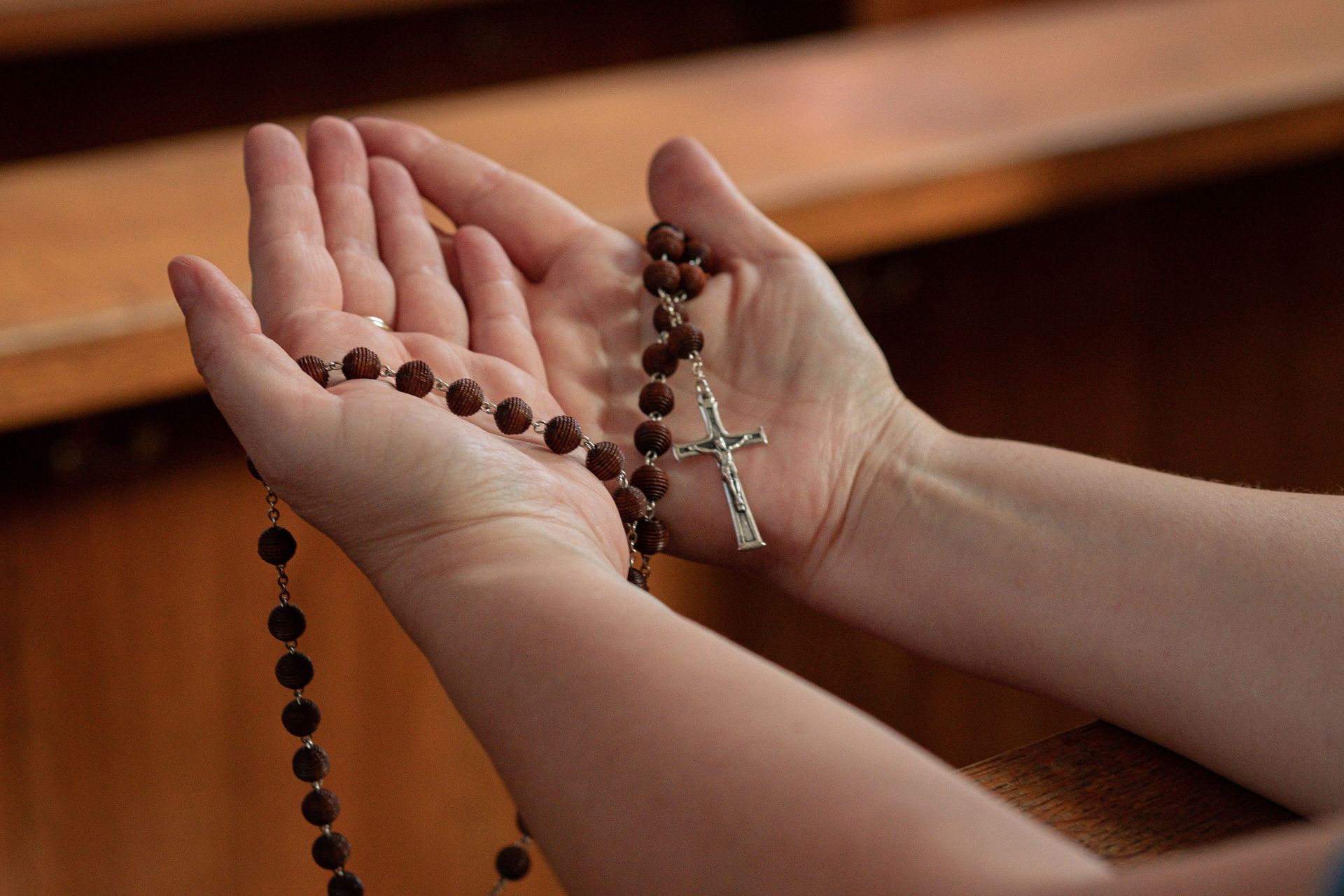
The feast day of Our Lady of the Rosary is 7th October. The month of October each year is dedicated to the Holy Rosary. It was instituted to honour the Blessed Virgin Mary in gratitude for the protection that she gives the Church in answer to the praying of the Rosary. The feast was introduced by Pope St Pius V in the year 1571 to commemorate the miraculous victory of the Christian forces at the Battle of Lepanto on 7th October 1571. The pope attributed more to the ‘arms’ of the Rosary than the power of cannons and the valour of the soldiers who fought there. The Rosary as a form of prayer was given to St Dominic by Mary, the Mother of Our Lord, who entrusted it to him as an aid in the conflicts with the Albigensians. The Dominican pope, St Pius V, worked to further the spread of the Rosary and it became one of the most popular devotions in Christendom. It was the same Pope St Pius V, who in 1569, formally approved the Rosary in its present form. It had been completed by the addition of the second half of the ‘Hail Mary’ and the ‘Glory be to the Father’ at the conclusion of each mystery. In the Middle Ages it came into being in various medieval monasteries as a substitute for the Divine Office for the lay monks and devout lay persons who did not know how to read. Instead of the 150 psalms, they would pray 150 ‘Our Fathers’ counting them on a ring of beads known as the crown or ‘corona.’ With the growth in popularity of Marian devotion in the twelfth century, the ‘Psalter of the Blessed Virgin Mary’ developed substituting 150 ‘Hail Marys’ in place of the ‘Our Fathers.’ The 150 ‘Hail Marys’ were subsequently subdivided into fifteen decades, with each decade referring to an event in the life of Jesus and Mary. These were further divided into episodes in the history of salvation, the joyful, sorrowful and glorious mysteries. Pope Leo XIII strongly promoted the increase of devotion to the Blessed Mother by encouraging the constant use of the Rosary. Beginning on 1 September 1883, with Supremo Apostolatus Officio, he wrote a total of eleven encyclicals on the Rosary, ending with Diuturni Temporis in 1898. Other popes have contributed to increase devotion to the Rosary by their writings. In the recent past, Pope Paul VI devoted the last section of his Apostolic Exhortation Marialis Cultus to the Angelus and the Rosary (MC 40-55). He wrote that “the Rosary retains an unaltered value and intact freshness.” The Rosary is primarily a scriptural prayer. This can be summarised by the traditional phrase used by Pope Pius XII that the Rosary is “a compendium of the entire Gospel.” The Rosary draws its mysteries from the New Testament and is centred on the great events of the Incarnation and Redemption. Please join together in the Rosary (at home) drawing closer to Jesus and Mary by meditating on the great mysteries of our salvation. When Fr D returns from his holiday we will celebrate one decade of the rosary after our weekday Masses on Wednesday, Thursday, and Friday (if there is no Requiem Mass)
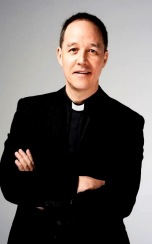
We have, as a parish, been allocated FIVE places at the Mass of Welcome for Bishop Elect Stephen which will be taking place at Worth Abbey on Saturday 24th October at 11.30. Given the timing of the event we suggest that you bring along a packed lunch. Travel to the event will only be by the organised coach that the diocese has arranged. For us, this will be departing from Our Lady of Sorrows, Effingham at 09.25. Return will also be to Our Lady of Sorrows but we have no timings for this. There is a reasonable amount of parking at Our Lady of Sorrows church. Those interested need to use the following link (first come first served) www.abdiocese.churchsuite.com/events/efcepzky?tickets=JROo Successful ticket applications should receive an email.
This map is to show the old and new times in each community of Epsom Deanery commencing 28/29 Nov 2026
The musings of one of God’s smallest creatures on events in and around the Parish over the past seven days . . . . Hugely busy week around The Presbytery this time as Fr D had both an ‘In-Service’ day with the rest of the priests of the diocese (Tuesday) and a Requiem Mass for his old housekeeper in Reigate (Wednesday). These were coupled with the electrician coming to deal with some minor improvements in the house, church, and Parish Centre, getting his bits of the Newsletter ready, and (washing) packing to go away meant that he was scrambling for time. Fr D was also acutely aware that the announcement of new Mass times whilst he was away was not the way he would have liked things to be, but all the clergy had agreed that the announcement of the new timings of Mass would be made on this weekend in every community in the Epsom Deanery; not ideal but the best that he could arrange. To this end there is a map in the newsletter showing the old and new times in each community and also a written A5 Flyer to go with the newsletter, please remember to take one home with you as well as the Newsletter (if you do not get it electronically by email). The clergy have been working on the new timetable since June and have spent several meetings in conversation with one another (as well as much prayer). There were several principles that they wanted to maintain in order to make the new timetable as pastoral as possible whilst recognising the new situation that we are all in: Saturday Vigil Masses are always counted as Sunday Masses Taking account of Fr Charles Howell leaving the area to go on a sabbatical (knowing that he will not be returning nor being replaced) Taking account that we have two priests who will be retiring in the near future (and are unlikely to be replaced) Minimum of two hours between the Masses a priest celebrates on a Sunday A Priest can celebrate a maximum of three Masses on a Sunday The necessary changes should be made now and not piecemeal over the next few years Trying to value the important connection between priest, people, and place Working together to share the impact of the changes that are necessary Our own community will be losing the 18.00 Saturday evening Mass and Fr D will be celebrating a 18.00 Saturday evening Mass in Effingham . . . . . .
Michael means, "Who is like God?" Of the three archangels mentioned by name in the Bible, St Michael the Archangel is mentioned the most. He is found in the Old Testament in Daniel 10:13-21, 10:21, 12:1, and in the New Testament in Rev. 12:7- 9 and Jude 1:9. St Michael is most known for doing battle against Lucifer (who could have been a seraph) and casting him and the other fallen angels out of heaven. Because of this feat, he is known as the leader or prince of the angels. St. Michael is the champion of God’s people and the protector of the Church. Also regarded as the angel who brings the souls of men to their judgment before God, thus being the angel of judgment. Gabriel means "Power of God." St Gabriel the Archangel is mentioned the most in the Bible after St. Michael. He is found in the Old Testament in Daniel 8:15 -26 and 9:21-27, and in the New Testament in Luke 1:11-38. St Gabriel is most known for his role in the Annunciation. He is the angel who appeared to Zachariah and the Blessed Virgin Mary announcing the birth of St John the Baptist and Incarnation of Jesus Christ, respectively. He is also believed by some to be the angel who appeared to St. Joseph and the shepherds at Christ’s nativity. Raphael means "God has healed" is only mentioned once in the Bible, in Tobit chapter 12. Here he was a companion, protector, and healer. He is also believed to be the angel who stirred the water in the pool of Bethesda in Jerusalem, giving it its healing properties. He therefore is regarded as a healing angel and a companion angel.