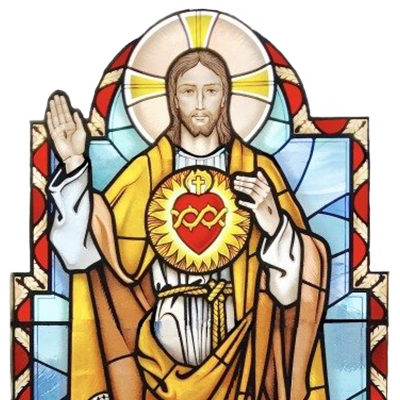
St Richard of Chichester . . .

Webmaster • June 11, 2021

A bishop and leading figure in England during his era, also called Richard de Wyche. Born at Wyche, Worcestershire, he was orphaned while a young lad, and managed to regain his fortune which had been mismanaged by others, and received an excellent Oxford, Paris, and Bologna education. At Oxford, he studied under the famous Robert Grossteste and became friends withSt Edmund Rich. He earned a doctorate in law from the University of Bologna. He was appointed the chancellor of Oxford in 1235 and then the chancellor to Edmund Rich, who was by now archbishop in Canterbury. After accompanying Edmund into retirement at the Cistercian abbey of Pontigny, France, he departed from the community upon Edmund’s death, teaching at the Dominican house in Orkans, and was ordained there in 1243. Upon returning home to England, he was appointed chancellor to St Boniface of Savoy. When King Henry III appointed Ralph Neville to the see of Chichester in 1244, Boniface ruled the nomination invalid and named Richard to the post, an act which caused an uproar in the kingdom. Finally, in 1245, Pope Innocent IV found in Richard’s favour but Richard was prevented from entering his palace through the machinations, of the king. Only after the king was threatened with the penalty of excommunication was Richard able to take up his duties.

He insisted upon a strict adherence to discipline among the clergy, aided the poor, and he fearlessly denounced the corruption and vices of the Church of the day and the royal court. His death came at Dover, in a home for poor priests, while delivering a plea for a crusade.

Richard was canonized in 1262, and his tomb became a popular shrine noted for its miracles until the Reformation in England. 
By Webmaster January 30, 2026
The musings of one of God’s smallest creatures on events in and around the Parish over the past seven days . . . . Quite a full week around The Presbytery this time as we finish the first month of the New Year (already!) . . . . Over last weekend Fr D met with someone in the process of being prepared to be received into the Church along with baptising her daughter; both have been working towards this for a few months now and we will hopefully accept them as members of our Parish community over Easter this year. Fr D also met with a young couple from the Parish who will be getting married in Sicily later in the year (fortunately both parties are Catholic so it requires the minimum of paperwork for Fr D to undertake!). At our 11.00 Mass on Sunday the Rite of Welcome was celebrated for a baby girl who will be baptised as a member of our community in a few weeks. Following Morning Prayer, Mass, and Exposition on Tuesday, Fr D went off to the diocesan offices in Crawley to continue his work at the Tribunal. In the evening he again met with the parents of this year’s First Eucharist candidates for their second session; this time they were looking at the first main section of the Mass the ‘Liturgy of the Word,’ ready to help their children on Saturday morning. On Wednesday, once he had celebrated Morning Prayer and Mass, Fr D began work on his parts of the newsletter for this week. In the afternoon he had a meeting with the other priests from the Deanery in response to a request from the Apostolic Nuncio. In the evening Fr D met with our candidates for Confirmation in the Parish Centre, looking at God’s love for us individually shown in Baptism and the other sacraments of the Church. Straight after celebrating Morning Prayer and Mass on Thursday Fr D, once more, went down to the Tribunal to continue his work on marriage cases. He, in fact, had several new applications to look at before deciding to accept them. He also had to inform someone that their annulment had failed to prove invalidity of their marriage. When he got home in the late afternoon Fr D managed to finalise and lodge his income tax (before the deadline!), as well as complete his parts for the newsletter.  Having celebrated Morning Prayer and Mass on Friday, Fr D had a church lighting engineer (just completed renewal of Worth Abbey) come to meet him in the church to look at possible solutions for replacing our obsolete halogen lighting and changing to more modern and cost effective LED lighting . . . . . . .
By Webmaster January 24, 2026
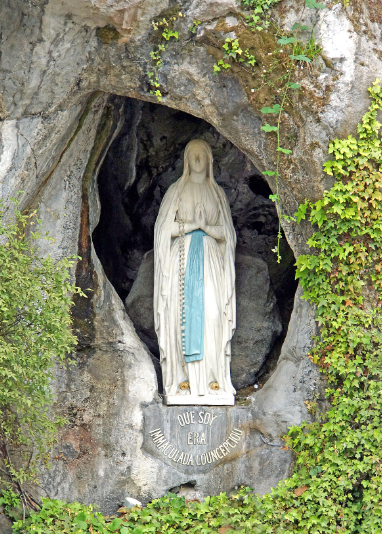
Applications for our Diocesan Lourdes Pilgrimage are open now! Is Our Lady calling you to Lourdes this summer? Travelling to Lourdes is a wonderful experience full of fun, companionship, faith, friendship and laughter. Each person on our pilgrimage brings distinctive gifts and graces with them, benefitting those they meet during the week. What do we do during our Pilgrimage Week? We have a daily programme of events which includes a number of Masses and liturgies in different settings, with different themes. The Pilgrimage opens with a Mass of welcome for everyone and opening ceremony, where everyone is invited to have their hands blessed in recognition of the service we offer each other as we make our pilgrimage together. We also celebrate Mass at the Grotto where we remember friends and family members who have died, and a Mass of farewell shortly before we leave Lourdes. There is a Holy Hour during the week, a time for Lectio Divina, and many other opportunities for private and group prayer at the Grotto and in the Sanctuary.
By Webmaster January 24, 2026
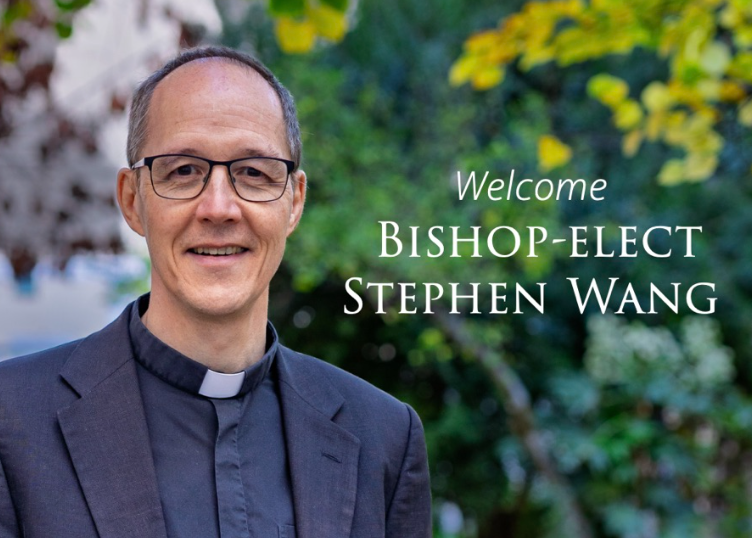
30th January, 18.30, Arundel Cathedral. People across our diocesan family are invited to join a special Mass of Thanksgiving celebrated by Bishop Richard, followed by a reception in the Baron’s Hall, Arundel Castle, by kind permission of His Grace, the Duke of Norfolk. All are welcome
By Webmaster January 24, 2026
18th February Ash Wednesday Masses 09.30 & 19.30 Lent Sundays Evening Prayer & Benediction 15.30 Lent Fridays Way of the Cross 12.30 (followed by Bread & Soup lunch) 
By Webmaster January 24, 2026
St John’s theory of education could well be used in today’s schools. It was a preventive system, rejecting corporal punishment, placing students in surroundings removed from the likelihood of committing sin. He advocated frequent reception of the sacraments of Reconciliation and Holy Communion. He combined catechetical training and fatherly guidance, seeking to unite the spiritual life with one’s work, study and play. Encouraged during his youth in Turin to become a priest so he could work with young boys, St John was ordained in 1841. His service to young people started when he met a poor orphan in Turin, and instructed him in preparation for receiving First Eucharist. He then gathered young apprentices and taught them the catechism. After serving as chaplain in a hospice for working girls, Don Bosco opened the Oratory of St Francis de Sales for boys. Several wealthy and powerful patrons contributed money, enabling him to provide two workshops for the boys, shoemaking and tailoring.  By 1856, the institution had grown to 150 boys and had added a printing press for publication of religious and catechetical pamphlets. St John’s preaching fame spread and by 1850 he had trained his own helpers because of difficulties in retaining young priests. In 1854, he and his followers informally banded together, inspired by St Francis de Sales.
By Webmaster January 24, 2026
After Jesus’ baptism and temptation in the desert (a peak experience followed by a period of intense testing) he is primed to begin the work that he has prepared his whole life to be able to do. Jesus begins in the small, non descript town of Capernaum populated mostly by Gentiles (nonJews). Looking back in scripture, Matthew noticed that specific area had been promised a saviour who would bring light to their world of darkness. For all the Jews in his audience, Matthew makes the point that Jesus was the fulfilment of that promise from the prophet Isaiah hundreds of years earlier. Matthew is trying to show that Jesus came to live and minister to and among both Jews and Gentiles and to invite all of them to the fullness of life he was teaching.  Jesus begins his public ministry sounding like John the Baptist. “Repent, for the kingdom of heaven is at hand.” We might interpret that now as “Get busy. Get serious. It’s time to start living in God’s way. There isn’t much time left.” Then Jesus calls Peter, Andrew, James, and John to be his helpers and companions as he gets busy healing the sick and proclaiming the Good News. If only everyone who preached repentance and the kingdom of God would get busy practicing what they preached! Questions of the week  What leaders or spiritual teachers have you experienced to be exclusive in terms of who they are speaking or preaching to? What leaders or spiritual teachers have you experienced to be open and inclusive in the way they welcome and invite all to be a part of a larger movement?  Whom do you know who lives with integrity and regularly practices what they preach?
By Webmaster January 24, 2026
The musings of one of God’s smallest creatures on events in and around the Parish over the past seven days . . . . At our 09.00 Mass last Sunday this year’s First Eucharist families were present for the enrolment of this year’s candidates. The candidates renewed their baptismal promises (which were made for them by their parents at their baptisms), before their parents reaffirmed the promise to be ‘the first and best of teachers to their child in the ways of faith.’ The candidates were then presented with the workbook that they will be using over the next few months to prepare for First Eucharist (on 14th June). In the evening Fr D was delighted to see so many parishioners at the annual Christian Unity Week Service at the United Church in Stoke Road - Sacred Heart Parishioners outnumbered any other group! On Monday evening Fr D came home early from his day off in order to attend a meeting of the ‘Shadow Parish Finance Team.’ Although with Bishop Richard having been appointed to Westminster and, therefore, no changes being possible within the diocese, it is possible to carry on with preparatory work and sharing of good practice by this team (none of this will be wasted if the new Bishop does not wish to continue with the new arrangements for our Deanery parishes). After Morning Prayer, Mass, and Exposition on Tuesday Fr D was off down to the diocesan offices in Crawley. He completed his judgement on one of his cases and started preparing the judgement for the next case. Once he has the two ready he will call a meeting of the judges to finalise the Sentence for both cases. When he returned from Crawley in the evening Fr D was meeting for the first time with the prospective candidates and parents for this year’s Confirmation (9th May). Having celebrated Morning Prayer and Mass on Wednesday morning Fr D spent some time gathering the details that he needs to complete his tax return for last year before starting work on his parts of the newsletter.  After Morning Prayer and Mass on Thursday Fr D was off down to Crawley again where he had a meeting with his opposite numbers in the Marriage Tribunal in Southwark, sharing with them how he deals with Penal Cases when they crop up. When he got back in the late afternoon Fr D was meeting with a young couple who are preparing for the baptism of their young daughter in a few weeks time . . . .
By Webmaster January 16, 2026
The Order of Franciscan Friars Minor has announced that 2026 will be a Franciscan Jubilee Year, with a Plenary Indulgence linked to the Jubilee. Francis of Assisi was born in Italy in 1181 or 1182. After a carefree youth, he amended his ways and the Order of Friars Minor - commonly known as the Franciscans - began. A young woman, Clare of Assisi, wanted to share St Francis’ choice of life, with the Order of the Poor Clares originating from her. Francis received the stigmata on the mountain of La Verna in 1224. The following year he composed the famous Canticle of Brother Sun, a poetic prayer of praise to God the creator of everything; this prayer and his attitude of respect for creation inspired his proclamation in 1979 as the patron saint of ecologists. Francis died on 4th October 1226 in Assisi and was declared a saint in 1228. In a letter to the Franciscans, Pope Leo writes: “In this age, marked by so many seemingly interminable wars, by internal and social divisions that create mistrust and fear, [St Francis] continues to speak. Not because he offers technical solutions, but because his life points to the authentic source of peace.”  “The Franciscan vision of peace is not limited to the relations between human beings, but also embraces the whole of creation. Francis, who calls the sun “brother” and the moon “sister,” who recognises in every creature a reflection of divine beauty, reminds us that peace must be extended to the entire family of Creation. This insight resonates with particular urgency in our time, when our common home is threatened and cries out under exploitation. Peace with God, peace among human beings and with creation are inseparable dimensions of a single call to universal reconciliation.”
By Webmaster January 16, 2026
This takes place each year from 18th to 25th January , providing an opportunity to focus our prayers on Christian unity and to join with our brothers and sisters in Christ. This year the Week of Payer takes Ephesians 4:1-13 as its central text; this includes the words “There is one body and one Spirit, just as you were called to the one hope of your calling” (Ephesians 4:4). Here in Cobham we are joining with the other Christian communities of the area in a United Service at 18.00 this Sunday (18th ), at the United Church in Oxshott Road.
By Webmaster January 16, 2026
Almost nothing is known of this Agnes except that she was very young - 12 or 13 - when she was martyred in the last half of the third century. Various methods of death have been suggested for her demise - strangulation, burning, beheading . . . Legend has it that Agnes was a beautiful girl whom many young men wanted to marry. Among those she refused, one reported her to the authorities for being a Christian. She was arrested and confined to a house of prostitution. The legend continues that a man who looked upon her lustfully lost his sight and had it restored by her prayers. Agnes was condemned, executed, and buried near Rome in a catacomb that eventually was named after her. Afterwards the daughter of Constantine built a basilica in her honour.  Like that of St Maria Goretti in the 20th century, the martyrdom of a virginal young girl made a deep impression on a society enslaved to a materialistic outlook. Also like St Agatha, who died in similar circumstances, Agnes is a symbol that holiness does not depend on length of years, experience, or human effort. It is a gift which God offers.