Sunday 20th March 2022

Webmaster • March 19, 2022

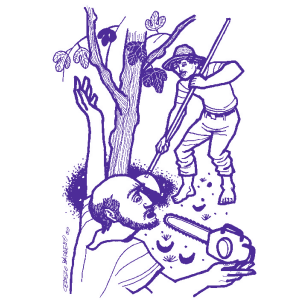
In this weekend’s gospel, the crowd reminds Jesus about the tragedy of what happened to a group of Galileans who had been standing at the altar worshipping God when they themselves became sacrificial offerings at the hands of Pilate’s henchmen. Although not historically recorded outside of the gospel, this incident would have been as politically explosive as those tragedies that are still too familiar in volatile and unreconciled parts of our world and in acts of indiscriminate terrorism. Jesus recognises the unspoken but implied question: Big sinners, big suffering? And answers with an explicit No. He himself raises the issue of eighteen people who were killed when the tower of Siloam accidentally collapsed on them. Neither of these incidents, says Jesus, is about God’s punishment of the victims’ sinfulness, although human nature is sometimes and mistakenly quick to make such a judgment. They show, rather, the fragility of our lives and the suddenness with which death can overwhelm us. We can be tempted to query, privately or publicly, the truth of our response to Psalm 103, “The Lord is kind and merciful,” but the laws of nature are not to be equated with the laws of morality. Jesus uses these events to make one point: what happened was sudden, with no time to avoid the catastrophes. But there is a much greater catastrophe on which the people need to focus: their unpreparedness for the merciful yet just judgment of God. So Jesus tells a parable about an unproductive fruit tree. A healthy fruit tree is interdependent, not self-sufficient; it takes nourishment from the soil in which it is planted and is further nourished by the work of the gardener who fertilises it. In turn, the tree gives back fruit.

In the judgment of the orchard owner, time has run out for the tree that had not borne fruit for three years, and it deserves to be cut down. It is all “take” from the soil that must also nourish the other trees, and no “give.” But the gardener begs his master to be patient and allow him another year of extra effort, digging around and fertilising the tree to see if it will bear some fruit. If it still does not, then it can be cut down. By choosing this reading for Lent, the Church suggests that the loving patience of our God is giving us another chance to do some seasonal gardening on ourselves: to loosen the soil around our personal and communal earthbound roots with the tools prayer, fasting, and almsgiving; to fertilise our lives with the rich Lenten liturgy of word and sacrament; and to strengthen, not weaken, one another by mutual care and kindness.

The tree is a fig, a sturdy tree. Unlike some of our indoor plants, fig trees do not droop and die overnight. It takes a long drought, continuous and insidious gnawing at the roots, or protracted neglect to make a fig tree barren. And what about us? What has gradually dried up and withered our Christian lives? Are there small infidelities gnawing away at the roots of our baptismal commitment? Are we failing to cultivate or prune our discipleship so that the sap of the Christ-life may continue to rise within us? Like the Galileans and the victims of the Siloam collapse, we can never be sure how many “nest years” lie ahead of us. “Today,” this Lent, is the important time of conversion.
By Webmaster December 5, 2025
The Word Who is Life: The Call to Mission Continuing to Develop Our Response . . . . . . Background As many of you already know, over several years, Bishop Richard has met with clergy and parishioners to reflect on the opportunities and challenges our Church is facing and how best to respond to them. He then published The Word Who Is Life — our Diocesan Pastoral Plan — which was then presented to everyone in the Diocese (there are synopsis’ still available in the church narthex). Locally, as part of this Plan, the nine parishes that today make up the present Epsom Deanery will come together to form a New Single Parish at some point in 2026. The central message of the Pastoral Plan is “ The Call to Mission ” — inviting all of us to help to shape our parishes into strong, lively, and welcoming communities. What’s happening now So what is happening now? Here in Epsom Deanery, a team formed from clergy and parishioners from EVERY parish has been discussing how we should respond to this The Call to Mission . One of the first things the team asked itself was how to get everyone involved. To that end, a meeting is planned in the New Year in each of our existing parishes to share information of what the Pastoral Plan means, how any necessary changes will be decided, and to get the participation of all communities in shaping what our response will be. For our Sacred Heart community this meeting will take place at 19.30 on Wednesday 21st January - Please put the date in your diary today! What we are now asking of you The Pastoral Plan is a call to all parishioners, and we know that our communities are blessed with many different gifts. That is why your participation is needed even before this meeting take place. On your way out of church today, you are asked to take a “ You’re Invited! ” POSTCARD and a FLYER which outline how we are shaping our response to this call and what we can expect to be different over the coming months and years. For example, one of the goals is a wider expansion of parishioner leadership, participation, and engagement. Another goal is for our parishes to work more closely with one another and with our schools. Both postcards and flyers include QR codes or a link to a website where you can find more information to help you make your contribution: in particular, we are asking you to get involved by helping us to identify: Opportunities, Challenges, and any Questions . There are several ways for you to share your thoughts:  You can fill in one of the “You’re invited!” postcards and return it before Sunday 14th December  You can use the online form whose address you will find on the flyer  Or, if you prefer, you can email directly to epsomdeanerynewsletter@gmail.com
By Webmaster December 5, 2025
Please be sure to put these dates into your diary now!
By Webmaster December 5, 2025
CAFOD is once again encouraging people to “swap the socks for something special this Christmas,” giving a World Gift that will delight loved ones and help families and communities around the world to thrive. CAFOD’s World Gifts are ethical presents that make a real difference - from their Winter Warmth gift helping families stay safe through cold weather, to their Super Soup Kitchens supporting local partners providing meals for those in need, every gift brings hope where it’s needed most. Each World Gift comes with a card to give to your loved one, showing how their gift is changing lives. You can also add extra festive joy with the charity's stocking fillers, from chocolates to devotional items, and even some adorable cuddly toys! Find out more from CAFOD’s brochure available in the narthex
By Webmaster December 5, 2025
This week Pope Leo concluded his Apostolic Journey to Türkiye and Lebanon on Tuesday. Bringing the 6-day apostolic visit to a close, he said: “We hope to involve the entire Middle East in [a] spirit of fraternity and commitment to peace, including those who currently consider themselves enemies.” Reflecting on the three days he spent in Lebanon, Pope Leo referenced the country’s rich spiritual heritage and the resilience of its people, noting the deep veneration for the Blessed Virgin Mary shared by both Christians and Muslims.  Addressing the ongoing challenges facing the country, he expressed solidarity with victims of the Beirut port explosion in 2020: “I carry with me the pain" he said, “and the thirst for truth and justice, of so many families, [and] an entire country.” Calling for an end to hostilities, he added: “We must recognise that armed struggle brings no benefit. While weapons are lethal, negotiation, mediation and dialogue are constructive. Let us all choose peace as a way, not just as a goal!” The Pope invoked the words of St John Paul II: “Lebanon is more than a country; it is a message! Let us learn to work together and hope together, so that this may become a reality.”
By Webmaster December 5, 2025
All little girls named Lucy must be disappointed when they first try to find out what there is to know about their patron. Older books will have details of a small number of traditions. Newer books will have a long paragraph showing that there is little basis in history for these traditions. The single fact survives that a disappointed suitor accused Lucy of being a Christian, and she was executed in Syracuse, Sicily, in the year 304. But it is also true that her name is in the Eucharistic Prayer, places are named after her, a popular song has her name as its title, and down through the ages many thousands of little girls have been proud of their name Lucy. One can easily imagine what a young Christian woman had to contend with in pagan Sicily in the year 300. Just think about today’s pleasure-at-all-costs society and the many barriers this presents against leading a good Christian life. To be pure before marriage was an ancient Roman ideal, rarely found, but not to be condemned. To decide to exclude marriage altogether, however, was too much. She must have something sinister to hide, so the tongues wagged.  Lucy knew of the heroism of earlier virgin martyrs. She remained faithful to their example and to the example of the carpenter, whom she knew to be the Son of God. She is the patroness of eyesight.
By Webmaster December 5, 2025
These collections provide income to the Parish for the support of clergy and may be Gift Aided. Any cheques should be made payable to the ‘Sacred Heart Parish.’ Cheques made out personally to Fr Daryl are ‘direct gifts’ and cannot be received into Parish Funds or Gift Aided. You will find a supply of Gift Aid envelopes for this collection in the church narthex.
By Webmaster December 5, 2025
After hearing the beautiful images of the lion and the lamb, the cow and the bear, and the child and the snake living together in peace in the first reading today, the Gospel passage about John the Baptist may seem jarring, or even off-putting. Then again, the words and actions of John the Baptist, whenever he shows up in the Gospels, are always strong, direct, and challenging. Sometimes people don’t want to hear his directness - or his challenges. John was on fire with the urgency that we turn our lives around. He was asking folks to repent of whatever in their lives was keeping them from living in God’s way of justice and peace. He gladly baptized those who acknowledged their sins, but he had little patience for false repentance, especially coming from religious leaders like the Pharisees and Sadducees. It didn’t matter to him who someone was, what family they came from, or what their religious background was - he wanted to see the fruits of their repentance. John was a New Testament version of the Old Testament prophets: fiery, passionate characters who un settled the rich and powerful but offered hope and consolation to those willing to be honest about their shortcomings.  As we prepare ourselves for Christmas, John is a valuable guide. His urgency to evaluate how we live in this world and how we need to change is hard to ignore. We have work to do before Christmas that doesn’t involve planning the perfect party or finding the perfect gift. Our work now is to acknowledge what we need to change, ask forgiveness, and get back to doing God’s work. Questions of the week  Who in your life is on fire for justice and repentance? What can you learn from them?  What can you do this coming week to “prepare the way of the Lord”?
By Webmaster November 29, 2025
Please be sure to get this date into your diary now!
By Webmaster November 29, 2025
Placing four candles on green fronds has become a symbol of Advent in many Christian homes. The Directory on Popular Piety & the Liturgy n.98 says: “The Advent wreath, with the progressive lighting of its four candles, Sunday after Sunday, until the Solemnity of Christmas, is a recollection of the various stages of salvation history prior to Christ’s coming, and a symbol of the prophetic light gradually illuminating the long night prior to the rising of the Sun of justice (cf. Malachi 3:20; Luke 1:78).”  The wreath can be the focal point of the home during the journey of Advent, with the lighting of the candles incorporated into a family meal. This simple Advent tradition can create fond, long-lasting memories of family Christmases by reflecting together on the true meaning of the celebration.
By Webmaster November 29, 2025
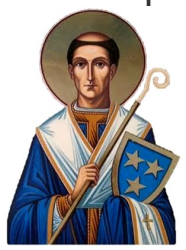
Nicholas was born at Patara, a seaside town in Licia, in southern Turkey, in the third century. He came from a good family that raised him as a Christian. His life, from his earliest days, was marked by obedience. When he was orphaned at a young age, Nicholas, remembering the rich young man in the Gospel, used his inheritance to assist the needy, the sick, and the poor. He was elected Bishop of Myra, and under the emperor Diocletian was exiled and imprisoned. After being freed, he attended the Council of Nicea in 325. He died in Myra on 6 December 343.  Many stories have been handed down about Nicholas, all testifying to a life spent in service to the weak, the small, and the defenceless.